

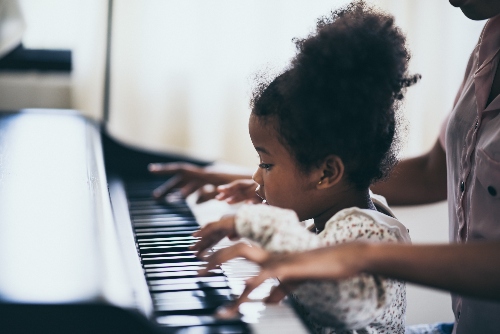
Music is not just something children hear. It is something their brains physically grow around. When a child begins learning an instrument, timing matters. Age influences how deeply music shapes the brain, how naturally skills develop, and how long the benefits last. While it is never too late to learn music, early exposure creates a unique neurological advantage that echoes throughout life.
Early years and brain plasticity
In early childhood, the brain is highly plastic. Neural connections form rapidly in response to experience. Learning an instrument during this period strengthens areas responsible for hearing, movement, memory, and attention. When a child coordinates fingers with sound, reads musical patterns, and keeps rhythm, multiple brain systems activate at once. Over time, these systems wire together more efficiently.
This is why children who start young often develop a natural sense of pitch, timing, and coordination. Music becomes intuitive rather than translated. The brain learns music the way it learns language.
Music and cognitive development
Starting an instrument at a young age supports skills far beyond music. Studies consistently show links between early musical training and improved memory, concentration, and problem-solving. Practicing an instrument trains the brain to focus, anticipate patterns, and manage complexity. These skills directly support learning in math, reading, and science.
Music also strengthens auditory processing. Children learn to distinguish subtle differences in sound, which improves listening skills and language development. This can be especially helpful during the early school years, when listening and comprehension are essential.
Discipline, patience, and emotional growth
Learning an instrument teaches children something rare in a fast world: progress takes time. Early musical training introduces structure, repetition, and delayed reward. Children learn that effort leads to improvement, even when progress feels slow. This builds patience and self-discipline, traits that shape confidence and resilience.
Emotionally, music gives children a way to express feelings they cannot yet explain. A melody can hold excitement, sadness, frustration, or joy. This emotional outlet supports self-regulation and emotional intelligence from an early age.
Is there a best age to start
There is no single perfect age, but early childhood, roughly between ages four and seven, is often ideal for starting basic musical instruction. At this stage, children are developing motor control and attention while remaining open to play-based learning. However, starting later still brings powerful benefits. Older children and even adults can develop strong musical skills and enjoy cognitive and emotional growth.
The difference is not possibility, but ease. Younger brains adapt faster, while older learners rely more on conscious effort. Both paths are valuable.
Music as a lifelong advantage
Children who learn instruments early often carry music with them for life. Even if they stop formal lessons, the brain benefits remain. Musical training builds a foundation for creativity, focus, and emotional balance. It also nurtures appreciation for art and culture, qualities that enrich both personal and social life.
Conclusion
Age plays an important role in how music shapes the brain, but the true value of learning an instrument lies in the process itself. Starting young allows music to become part of how a child thinks, feels, and learns. It trains the brain to listen deeply, move with intention, and grow through practice. In giving children music early, we give them a lifelong tool for learning, expression, and connection.