
Urban art did not arrive politely. It climbed fences, borrowed walls, and spoke before it was invited. Its evolution mirrors the tension between visibility and control, between the urge to mark space and the systems designed to regulate it. What began as anonymous signatures has become one of the most influential visual languages of contemporary cities.

-
Origins: claiming presence
Urban art’s modern story starts in the late 1960s and 1970s, especially in New York City. Early graffiti writers tagged trains and walls not for profit or recognition by institutions, but for existence itself. A name repeated across neighborhoods was a declaration: I am here. In communities marginalized by race, class, and geography, the city became a shared notebook. The repetition of tags created a visual rhythm that challenged who had the right to be seen in public space.
This phase was fast, competitive, and ephemeral. Works were meant to travel, fade, or be erased. Permanence was never the goal; circulation was.
-
Style, complexity, and identity
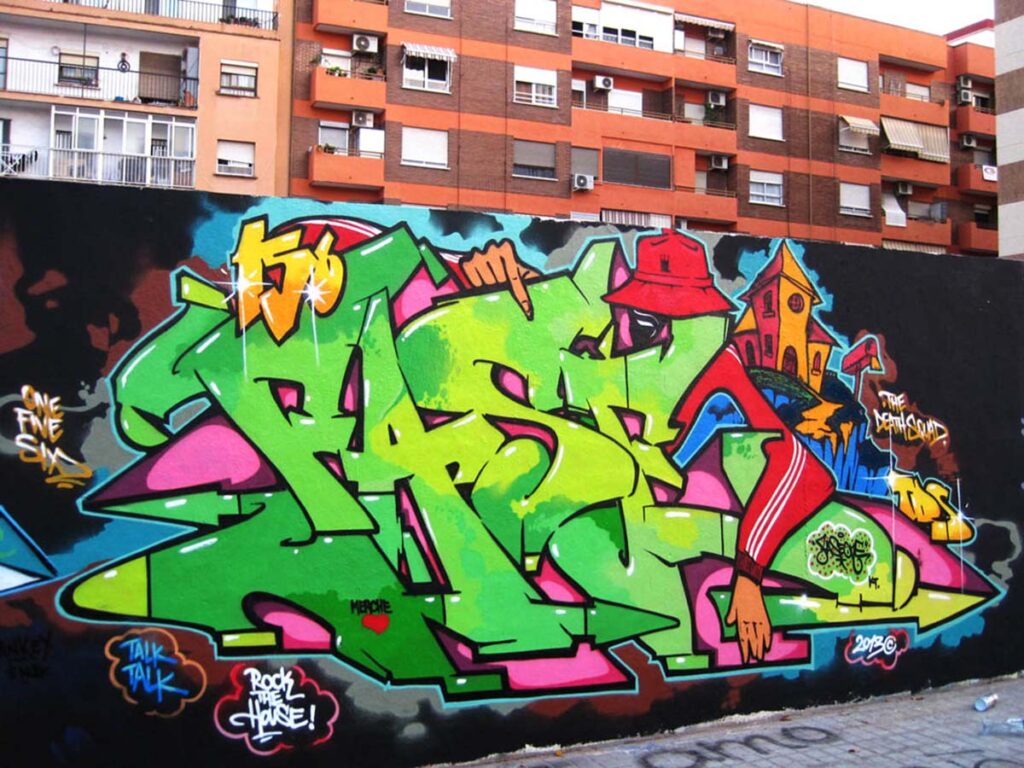
By the 1980s, graffiti evolved from simple tags into elaborate letterforms, characters, and color systems. Style became currency. Wildstyle lettering, murals, and crews introduced hierarchy and authorship within the movement itself. Urban art developed its own internal rules, aesthetics, and histories, largely invisible to the mainstream.
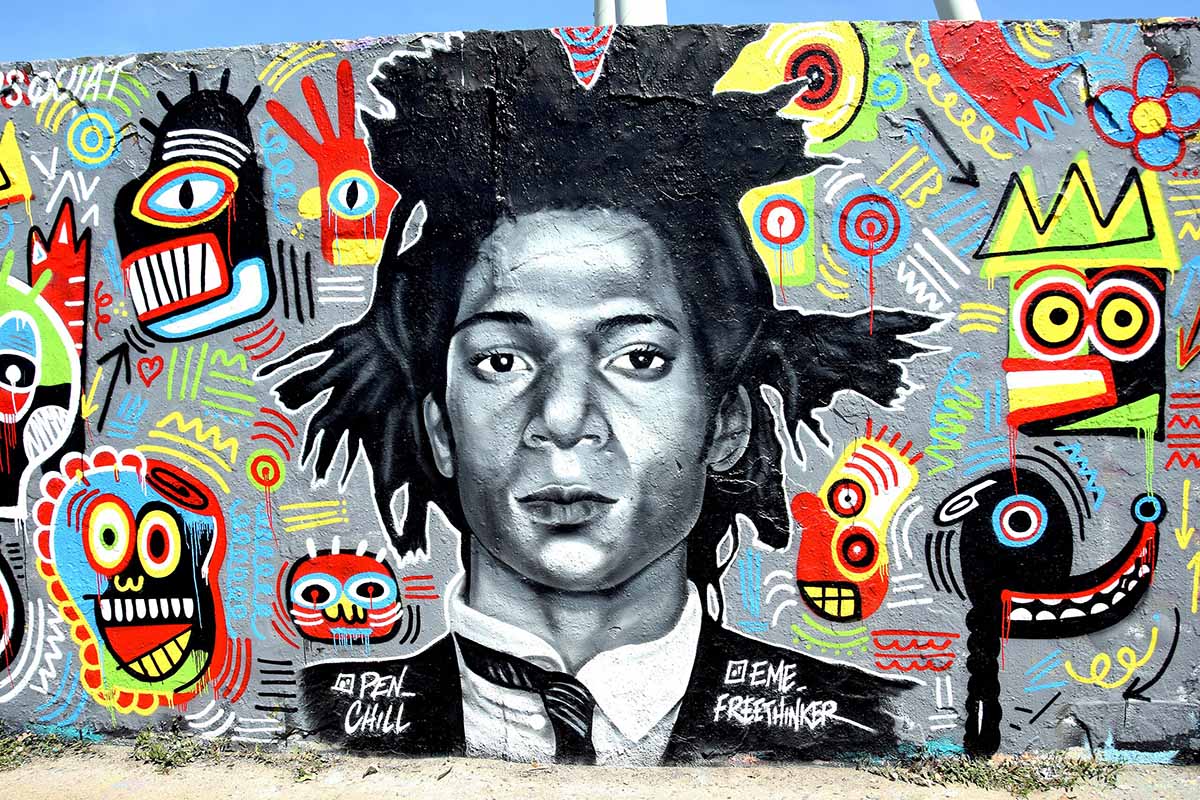
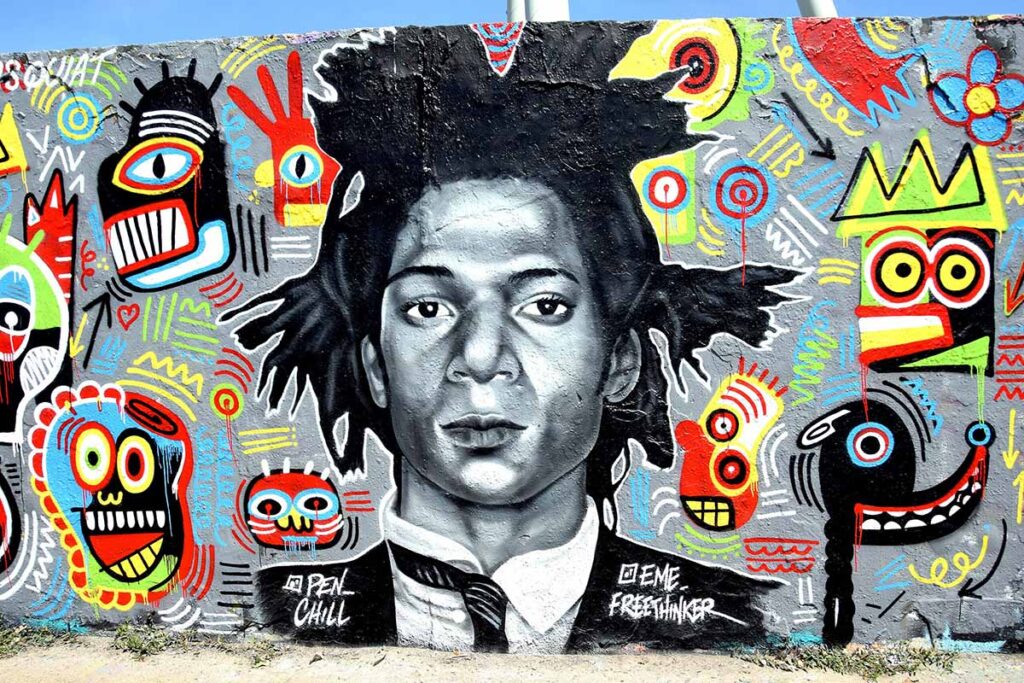
At the same time, galleries began to notice. Artists such as Jean-Michel Basquiat and Keith Haring crossed the boundary between street and institution, carrying urban visual language into museums without fully abandoning its urgency. This period marked the first major tension between authenticity and assimilation.
-
From graffiti to street art: message over name
In the 1990s and early 2000s, urban art shifted toward imagery and messaging. Stencils, paste-ups, and installations allowed for faster execution and clearer communication. Artists like Banksy used public walls to deliver political satire, social critique, and dark humor. The emphasis moved from personal identity to collective commentary.
This transformation expanded the audience. Urban art became legible to passersby who had never decoded graffiti lettering. It also became more confrontational, addressing war, surveillance, capitalism, and inequality directly in the spaces where those forces operate.
-
Globalization and institutional embrace
As cities around the world adopted murals as tools for regeneration, urban art entered a paradoxical phase. Municipal commissions, festivals, and brand collaborations offered artists resources and visibility, but also constraints. Walls once chosen for risk were now selected for optics. Rebellion was curated.
Yet globalization also diversified voices. From São Paulo to Berlin, from Johannesburg to Beirut, urban art absorbed local histories and struggles, becoming a global language with regional dialects. The street became an archive of protest, memory, and identity.
-
Digital age and permanence through circulation
Ironically, urban art found permanence through the internet. Photographs shared on social media preserve works long after they are erased. Algorithms replaced subway lines as distribution systems. This digital afterlife altered how artists think about audience, scale, and authorship.
Today, urban art exists simultaneously as illegal act, public service, commodity, and historical document. It resists simple classification because it was never meant to be still.
Conclusion
The evolution of urban art is not a straight line toward legitimacy. It is a loop between visibility and erasure, resistance and recognition. Its power lies in its relationship to space: unsanctioned, immediate, and human. As long as cities remain unequal, layered, and contested, urban art will continue to evolve, writing itself into the cracks of the urban landscape where official narratives fall silent.