

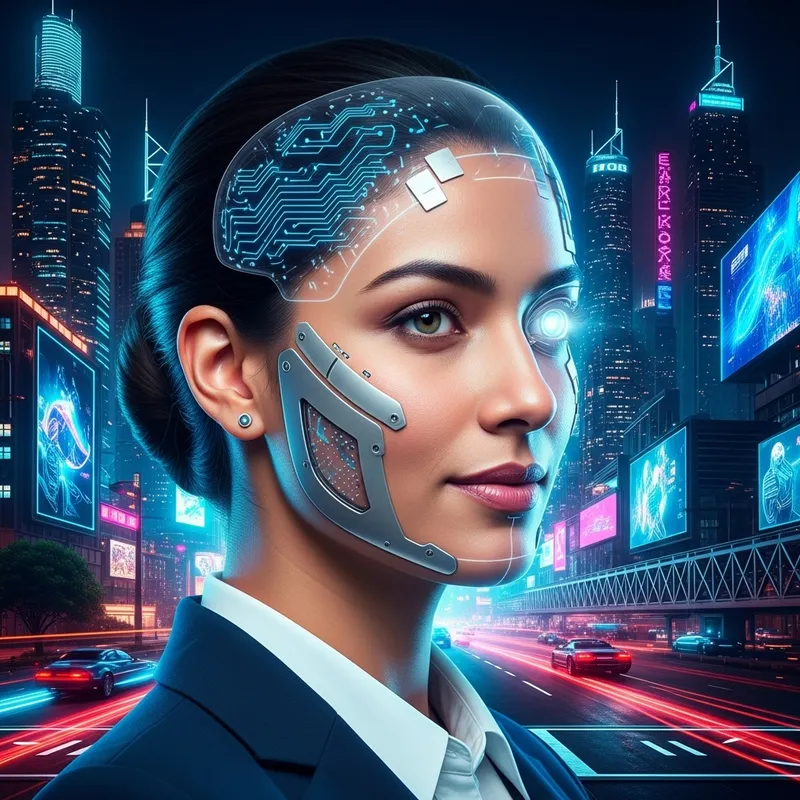
Artificial intelligence is no longer a distant concept in fashion. It is already sketching silhouettes, predicting trends, optimizing supply chains, and influencing what ends up in our closets. Yet AI’s role in fashion is not simply technological. It is cultural, creative, and deeply human in its consequences.
Fashion is entering a new phase where imagination and computation coexist.
From Inspiration to Algorithm
Traditionally, fashion design began with intuition, mood boards, fabric exploration, and lived experience. Designers translated emotion, culture, and personal vision into form. AI introduces a new kind of inspiration: pattern recognition at scale.
By analyzing vast datasets of images, colors, silhouettes, and consumer behavior, AI can identify emerging trends before they are visible on the street. It does not “feel” culture, but it detects repetition, acceleration, and shifts in taste.
This changes how inspiration is sourced. Designers now work not only with intuition, but with insight generated by machines.
Designing With Machines, Not Replacing Designers
One of the biggest misconceptions about AI in fashion is that it replaces creativity. In practice, it reshapes it.
AI can generate hundreds of variations in seconds. It can suggest color combinations, silhouette adjustments, or fabric pairings. But it does not understand meaning, context, or intention.
Design still requires judgment.
The most compelling use of AI treats it as a collaborator, not an author. Designers curate, refine, reject, and reinterpret what machines produce. Creativity shifts from generating from scratch to selecting with discernment.
Speed and the Risk of Homogenization
AI accelerates the design process dramatically. This efficiency can reduce waste and shorten development cycles, but it also carries risk.
When many brands rely on similar datasets and predictive tools, designs can converge. Fashion risks becoming more uniform, driven by what algorithms believe will sell rather than what culture is ready to feel.
Without strong creative direction, AI can reinforce sameness.
The challenge is not speed, but intention.
Personalization and the End of One-Size Style
One of AI’s most transformative impacts is personalization. Algorithms can analyze individual preferences, body measurements, and lifestyle data to recommend or even generate customized designs.
This moves fashion closer to the individual again.
Instead of mass trends, AI has the potential to support micro-style, garments adapted to real bodies and real lives. If used thoughtfully, this could reverse decades of standardization.
Personalization, however, must be balanced with privacy and consent.
AI and Sustainable Design
Sustainability is one of the most promising areas where AI can have a positive impact. Predictive analytics can reduce overproduction. Smart inventory systems can minimize waste. Design simulations can test materials and construction digitally before physical samples are made.
AI can help fashion slow down, paradoxically by making it smarter.
But sustainability depends on how tools are used, not just on their availability. Efficiency without ethical goals still leads to excess.
Creativity vs Prediction
Fashion has always thrived on surprise. AI thrives on prediction.
This creates tension.
When design decisions are guided too heavily by data, fashion risks losing its emotional edge. Some of the most influential styles in history were initially unpopular, misunderstood, or risky.
True creativity often defies prediction.
Designers must decide when to listen to data and when to ignore it.
The Designer’s Role in the AI Era
As AI takes over technical and analytical tasks, the designer’s role becomes more philosophical.
Designers become:
-
Editors rather than producers
-
Storytellers rather than trend followers
-
Ethical decision-makers rather than purely aesthetic ones
The value of human creativity shifts toward meaning, context, and cultural sensitivity.
AI can suggest. Humans must decide.
The Ethics of AI in Fashion
AI systems are trained on existing data, which includes historical bias. If not examined, these biases can be reproduced in design, representation, and marketing.
Who is visible?
Which bodies are prioritized?
Which aesthetics are valued?
Ethical oversight becomes essential. Fashion powered by AI must still answer human questions about inclusion, diversity, and dignity.
A New Creative Balance
AI will not end fashion design. It will redefine it.
The future of fashion lies in balance: between speed and depth, prediction and surprise, automation and intuition. AI can expand creative possibility, but only if guided by human values.
Fashion has always reflected its time. In the age of artificial intelligence, it reflects a new question:
How do we use powerful tools without losing the human touch that makes fashion meaningful?
The answer will not be written by algorithms alone. It will be shaped by designers who know when to listen to machines, and when to trust themselves.
NY Glamour Recommends
“A carefully selected collection of products inspired by today’s story.”


