

Leaves of Grass by Walt Whitman is one of the most radical acts of self-expression in literary history, a book that reshaped poetry by insisting that the ordinary human life is vast enough to contain the universe. First published in 1855 and revised repeatedly throughout Whitman’s life, Leaves of Grass is not a closed work but a living one, expanding as its author expanded, mirroring the growth, contradictions, and unfinished nature of the self.
At the center of the book stands Whitman’s revolutionary idea: the individual is not small, separate, or insignificant. The individual is cosmic. In celebrating himself, Whitman celebrates everyone. His famous declaration, “I celebrate myself, and sing myself,” is not arrogance but inclusion. The “I” of Leaves of Grass is porous and expansive, absorbing laborers, lovers, soldiers, outcasts, women and men, the sick, the enslaved, the living and the dead. Whitman’s voice moves freely between the personal and the universal, dissolving boundaries between self and world.
Whitman rejects the traditional poetic forms of his time, abandoning strict meter and rhyme in favor of long, rolling lines that mimic breath, thought, and motion. His free verse feels less like reading and more like listening to a voice speaking directly, urgently, without permission. This formal freedom is inseparable from his philosophy. To write freely is to live freely. To break poetic rules is to challenge social, spiritual, and political constraints.
The body plays a central role in Leaves of Grass. Whitman writes openly about flesh, desire, sensation, and physical presence with a frankness that shocked his contemporaries. The body is not something to be transcended or ashamed of. It is sacred. By honoring the body, Whitman collapses the divide between the spiritual and the material. The soul does not float above life. It inhabits it fully. Every touch, every breath, every ache is part of the cosmic whole.
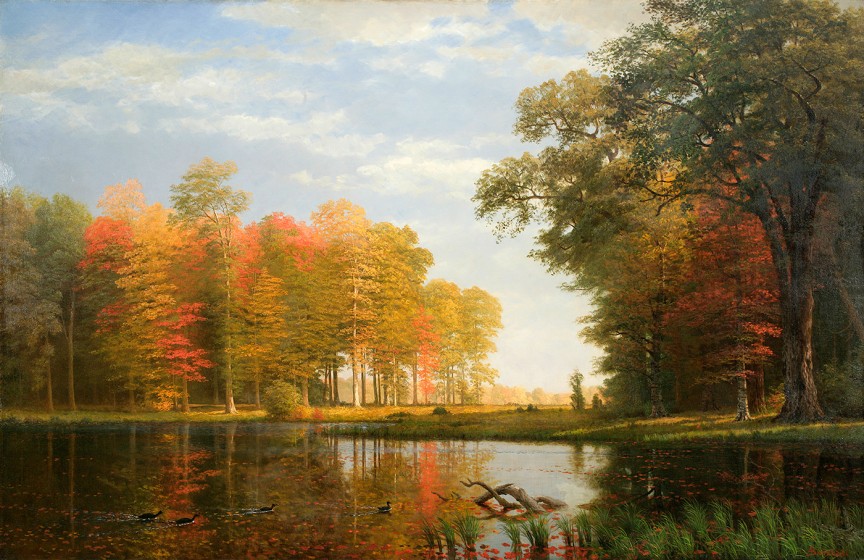
Nature in Whitman’s poetry is not distant or symbolic. It is intimate and democratic. Grass, rivers, animals, stars, and cities all share equal dignity. A blade of grass carries as much mystery as the night sky. Through this vision, Whitman proposes a radical equality that extends beyond human society into existence itself. Nothing is insignificant. Nothing exists merely as background.
Leaves of Grass is also deeply rooted in America, not as an abstract ideal, but as a living, struggling experiment. Whitman writes of workers, ferries, streets, war hospitals, and open roads. He embraces contradiction, recognizing beauty alongside brutality, hope alongside injustice. During the Civil War, his poetry absorbs grief and compassion, transforming suffering into connection. Even in the face of death, Whitman refuses isolation. He insists on continuity, on the idea that no life ends alone.
One of Whitman’s most daring assertions is that death is not an ending, but a transformation. Just as the self expands beyond the body in life, it continues beyond it in death. This belief does not rely on doctrine or fear. It emerges from Whitman’s trust in belonging. To be part of the universe is to be incapable of disappearance. Matter changes form. Voices echo. Presence persists.
What makes Leaves of Grass endure is its generosity. Whitman does not ask the reader to admire him. He invites the reader to recognize themselves. His poetry offers permission to exist fully, to contradict oneself, to grow, to desire, to belong. “Do I contradict myself,” he asks. “Very well then I contradict myself. I am large, I contain multitudes.”
In celebrating the individual as cosmic, Leaves of Grass offers a vision of humanity that is expansive rather than limiting, connected rather than isolated. It reminds us that within each ordinary life lives something immeasurable, and that to know oneself deeply is to touch the vastness of the world itself.



Love the layout and the way the promotions are set up. It feels like they actually care about the players. Cheers to phjilijili for the awesome experience.
I’ve been using this platform for a while now and the interface is super smooth. Definitely one of the best options available right now. Check out krbetwinnerapp for a great experience.