

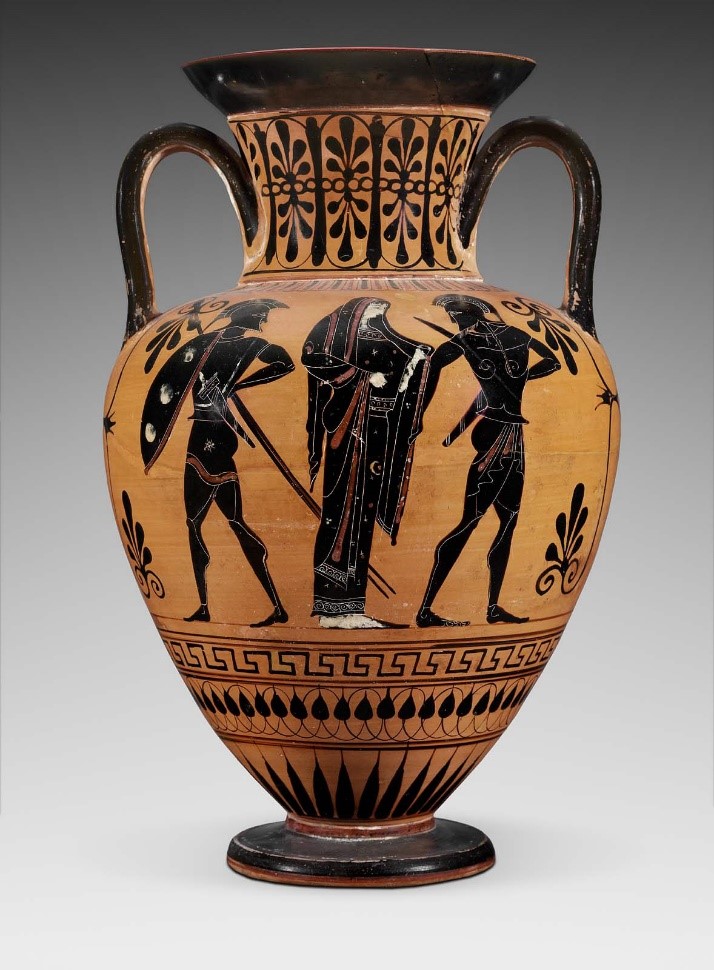
The Odyssey by Homer is one of the most enduring stories ever told, not because of its monsters or gods, but because it captures a feeling that never fades: the ache of longing and the search for home. Written nearly three thousand years ago, The Odyssey is a journey across seas and years, but more importantly, it is a journey inward, one that defines identity through loss, patience, memory, and survival.
Unlike The Iliad, which unfolds in the heat of war, The Odyssey begins in its aftermath. The Trojan War is over, heroes are returning home, and yet Odysseus, king of Ithaca, remains absent. He is not trapped by battle anymore, but by fate, by the gods, and often by his own choices. From the start, the poem frames its central tension: a man who desperately wants to return home, yet is continually delayed by the very traits that define him, intelligence, curiosity, pride, and cunning.
A hero defined by wit, not strength
Odysseus is not the strongest warrior, nor the most honorable in a traditional sense. He survives through intellect, adaptability, and storytelling. He lies, disguises himself, and bends rules when needed. In a world of rigid heroic codes, Odysseus represents a different kind of hero, one who understands that survival often requires compromise. His encounters with the Cyclops, the Sirens, Circe, and the dead are not just physical trials, but tests of restraint, humility, and self-knowledge.
Longing as the engine of the journey
What separates The Odyssey from a simple adventure tale is longing. Odysseus is repeatedly offered escape from mortality. He could stay with Circe in comfort. He could remain with Calypso and live forever. Yet he refuses immortality because it would cost him his identity. Home, with all its limits and pain, matters more than eternal life. The poem suggests that to be human is to accept time, aging, and loss, and still choose belonging over perfection.
Penelope and the meaning of fidelity
While Odysseus wanders, Penelope waits. Her patience is not passive. She resists dozens of suitors through intelligence and endurance, mirroring Odysseus’s own cunning. Penelope embodies another form of heroism, one rooted in loyalty, memory, and quiet resistance. Together, Odysseus and Penelope form a balance, movement and stillness, action and preservation, both necessary for home to exist.
Identity tested through disguise and recognition
A central theme of The Odyssey is recognition. Odysseus spends much of the poem hidden behind false names and appearances. When he finally returns to Ithaca, he does not reclaim his identity immediately. He observes, tests, and waits. Only when he is recognized by those who truly know him, his old nurse, his son Telemachus, and finally Penelope, does he fully become himself again. The poem suggests that identity is not fixed, but confirmed through relationships and memory.
Home as more than a place
Ithaca is not described as grand or wealthy. It is small, rugged, and imperfect. Yet it represents something irreplaceable. Home is where one’s story is understood, where suffering has context, and where time has meaning. Odysseus does not return as the man who left. He returns changed, scarred, and wiser. Home does not erase his journey. It completes it.
Why The Odyssey still matters
The Odyssey endures because it understands something essential about human life: that we are always traveling between who we were and who we are becoming. We long for places, people, and versions of ourselves that may no longer exist, yet the act of returning, physically or emotionally, gives shape to our lives. In defining longing, identity, and the meaning of home with such emotional clarity, Homer created not just an epic, but a map of the human heart.