
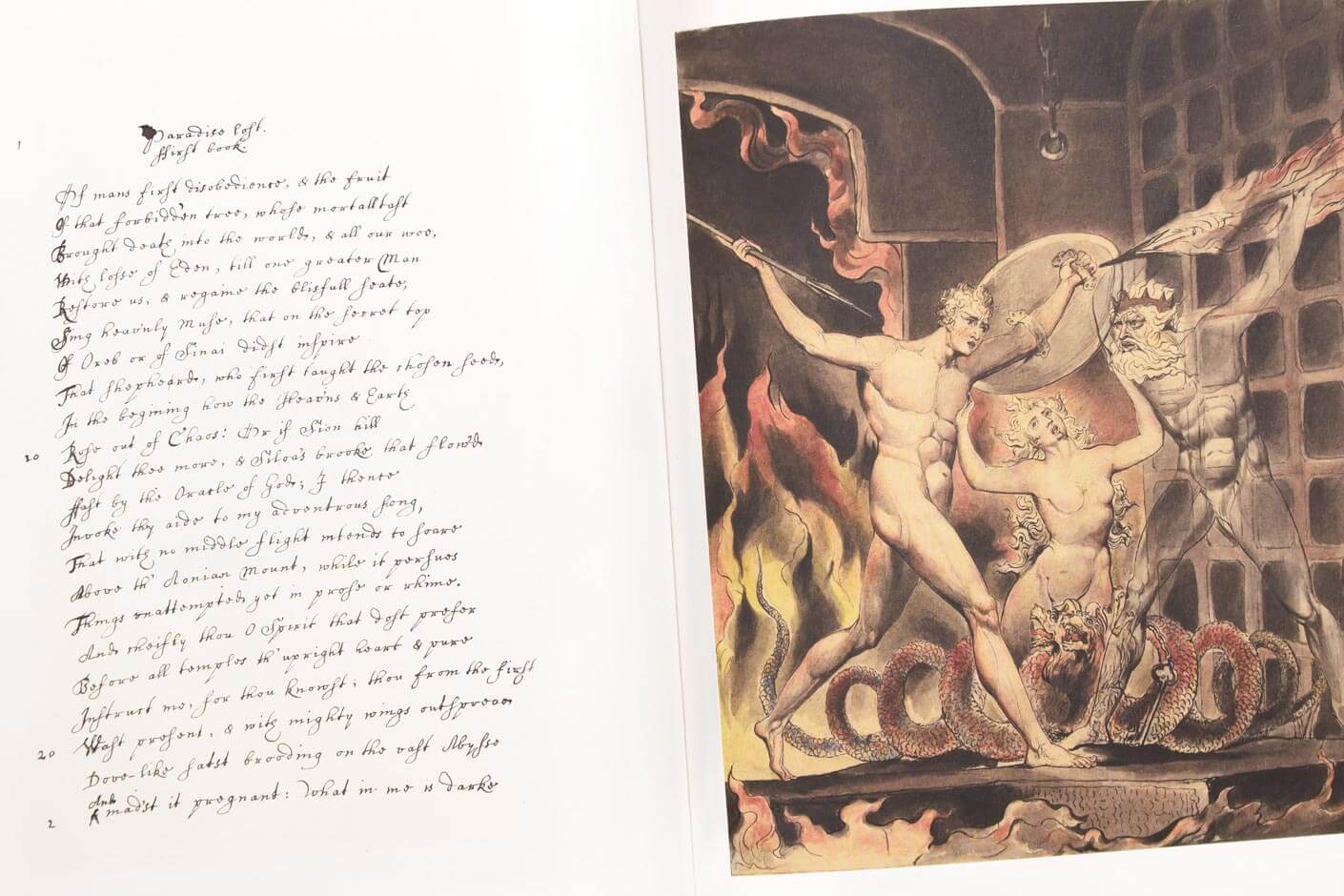
Paradise Lost by John Milton is one of the most ambitious poems ever written, a work that dares to confront the origins of evil, freedom, and suffering on a cosmic scale. Published in the seventeenth century, the poem reimagines the biblical story of the Fall not as a simple act of disobedience, but as a vast moral drama involving heaven, hell, angels, and humanity itself. Milton’s achievement lies not only in the scope of his vision, but in the unsettling depth with which he explores choice, rebellion, and responsibility.
The poem opens not in Eden, but in Hell. Satan and his followers have already fallen, cast down after rebelling against God. From the very beginning, Milton frames the story as one of consequences already in motion. Satan is introduced with terrifying charisma, a figure of immense will and rhetorical brilliance. His refusal to submit, his declaration that it is “better to reign in Hell than serve in Heaven,” gives him a tragic grandeur that has fascinated readers for centuries. Milton does not ask us to admire Satan, but he forces us to understand him. In doing so, he exposes how pride, wounded ambition, and the thirst for autonomy can masquerade as heroism.
Hell in Paradise Lost is not merely a place of fire and punishment. It is a psychological state, defined by separation from grace and by endless self-justification. Satan’s suffering is not imposed from the outside alone. It is sustained by his inability to repent, by his decision to define himself through defiance rather than humility. Milton presents evil not as mindless destruction, but as a conscious turning away from order and love.
Against this darkness, Milton constructs Heaven as a realm of harmony, reason, and obedience, yet not of tyranny. God in Paradise Lost is omniscient, but humans are still granted free will. This tension is central to the poem’s moral argument. Adam and Eve are created innocent, capable of choosing rightly, yet free to fall. The tragedy of humanity does not arise from ignorance alone, but from choice. Milton insists that obedience has meaning only when disobedience is possible.
Eden itself is portrayed as a place of balance and beauty, where reason governs desire and harmony exists between humanity and nature. Adam and Eve are not naïve children, but thoughtful beings capable of conversation, love, and reflection. Their relationship is tender and complex, marked by affection, hierarchy, and mutual dependence. Milton gives Eve particular psychological depth, portraying her curiosity, self-awareness, and longing for independence as both admirable and dangerous.
The Fall occurs not in a moment of pure malice, but through persuasion, doubt, and the subtle erosion of trust. Satan does not force Eve to eat the forbidden fruit. He convinces her. He appeals to her desire for knowledge and elevation, echoing the same temptation that led to his own downfall. When Adam chooses to follow Eve, knowing the consequences, the poem reaches its most devastating insight. Love itself becomes entangled with disobedience. The Fall is not an accident. It is a conscious act shaped by emotion as much as reason.
After the Fall, the world changes immediately. Shame enters. Desire becomes corrupted. Nature itself begins to decay. Milton depicts this transformation with relentless clarity, showing how inner disorder spills outward into the fabric of existence. Yet Paradise Lost does not end in despair. Even as Adam and Eve are expelled from Eden, they are given knowledge, conscience, and the possibility of redemption. Suffering becomes the price of freedom, but also the path toward moral growth.
What gives Paradise Lost its terrifying grandeur is its refusal to simplify. Milton does not excuse evil, nor does he deny its appeal. He does not deny human responsibility, nor does he strip humanity of dignity. Instead, he presents a universe where freedom is real, consequences are absolute, and meaning is earned through struggle.
Paradise Lost endures because it confronts the darkest questions without flinching. Why do we choose what harms us. Why does pride feel like strength. Why does freedom carry such a heavy cost. In telling the fall of man with such intellectual power and poetic force, Milton created not just a religious epic, but a timeless meditation on the danger and dignity of being free.