
Rubaiyat by Omar Khayyam is one of the most enigmatic and haunting works in world literature, a collection of short quatrains that question existence with quiet defiance. Written in Persia in the eleventh century, the Rubaiyat does not offer doctrine or comfort. Instead, it whispers doubts, challenges absolutes, and invites the reader to sit with uncertainty. Its verses linger on wine, time, fate, and the fragile nature of human knowledge, creating a philosophy that feels as unsettling today as it was radical in its own era.
At the heart of the Rubaiyat lies a deep skepticism toward certainty. Khayyam, who was not only a poet but also a mathematician and astronomer, understood the limits of human understanding. His poetry reflects this awareness. He questions religious dogma, the promise of an afterlife, and the idea that human suffering follows a clear moral logic. Rather than offering answers, he exposes how little we truly know. The universe, in his vision, is vast, indifferent, and ultimately unknowable.
Wine as rebellion and awakening
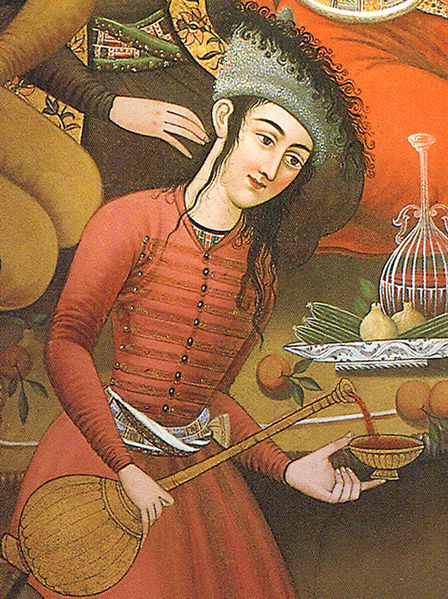
Wine appears constantly in the Rubaiyat, but it is not merely literal. It is a symbol of rebellion against rigid belief, a rejection of false piety, and a call to awaken to the present moment. Wine represents joy in the face of uncertainty, a refusal to postpone living for promises that may never be fulfilled. In Khayyam’s verses, wine loosens the grip of fear and dogma, allowing the mind to confront existence honestly. It is an act of defiance against a world obsessed with rules and rewards beyond this life.
Time as the great thief
Time in the Rubaiyat is relentless. Moments vanish as soon as they are noticed. Youth fades. Empires crumble. Certainty dissolves. Khayyam repeatedly reminds the reader that tomorrow is never guaranteed and that yesterday is irretrievable. This awareness does not lead him to despair, but to urgency. If life is brief and unpredictable, then meaning must be found now, not deferred. The present moment becomes sacred precisely because it is fleeting.
Fate and the illusion of control
Khayyam wrestles openly with fate. He questions whether human effort truly matters in a universe governed by forces beyond comprehension. Are we authors of our lives, or merely actors following a script already written? The Rubaiyat offers no resolution. Instead, it sits in the tension between free will and inevitability. This uncertainty becomes central to its power. Rather than clinging to certainty, Khayyam suggests dignity lies in acknowledging our limits.
Pleasure as honesty, not excess
The pleasure celebrated in the Rubaiyat is often misunderstood as indulgence. In truth, it is philosophical. Khayyam does not glorify excess, but awareness. Pleasure is a form of honesty, a recognition that life’s value lies in experience, connection, and presence. To deny joy in the name of abstract ideals is, in his view, another kind of illusion.
Why the Rubaiyat still speaks to us
The Rubaiyat endures because it refuses easy comfort. It does not promise salvation, certainty, or eternal justice. Instead, it offers something rarer: intellectual courage. Khayyam dares to say “I do not know” in a world desperate for answers. His poetry speaks to anyone who has questioned belief, feared time, or felt the weight of impermanence.
In wine, in doubt, and in fleeting moments, the Rubaiyat finds its quiet truth. Life is uncertain. Time is merciless. Certainty is fragile. And yet, within that fragility, there is beauty. To live fully is not to escape uncertainty, but to raise a cup to it, knowing the moment will soon pass.