
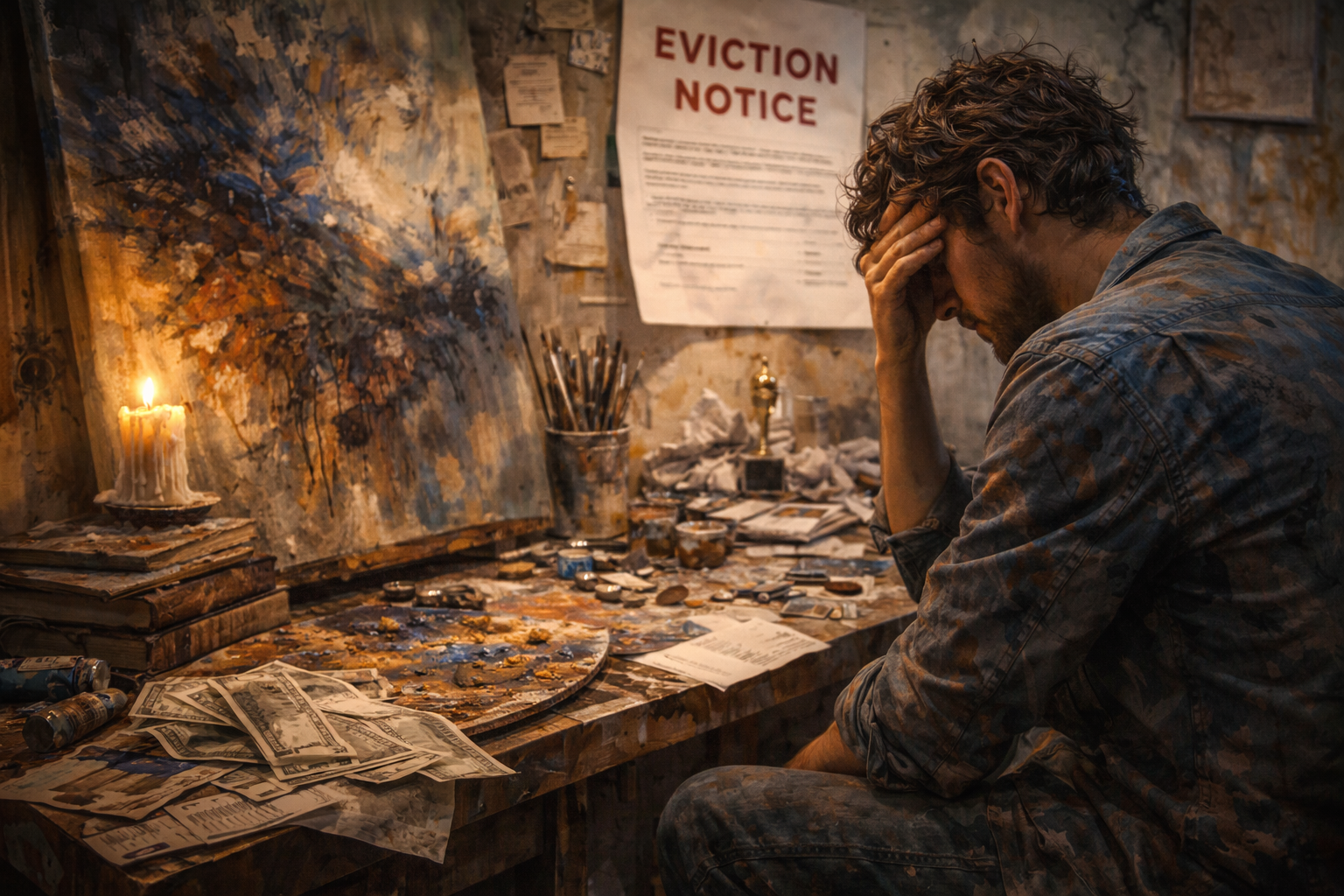
The image is familiar: the artist in a cold studio, misunderstood, unpaid, sacrificing comfort for creativity. Poverty is framed as proof of authenticity. Struggle becomes a badge of honor. This myth has been romanticized for centuries, and despite living in a world of unprecedented creative tools and platforms, it still refuses to disappear.
The “starving artist” is not an accident of history.
It is a story society keeps telling.
Where the Myth Came From
Historically, many artists truly were poor. Patronage was unstable. Markets were limited. Art was not designed for mass distribution. Financial insecurity was often unavoidable.
But hardship gradually became symbolic. Suffering was rebranded as evidence of genius, depth, and purity. Comfort became suspect. Money became a sign of compromise.
Poverty was turned into a narrative.
Why Suffering Feels Romantic
The myth persists because it fits a compelling story arc. Struggle followed by recognition feels meaningful. It suggests that greatness requires sacrifice, and that pain refines talent.
But this narrative simplifies reality.
Suffering does not create art. It may shape it, but it also limits energy, focus, and access.
The Moral Suspicion of Success
Society often mistrusts artists who succeed financially. When an artist earns well, questions arise: have they sold out? Are they still honest? Is their work less serious?
This suspicion reinforces the myth.
It implies that real art must be economically unviable.
Who Benefits From the Myth
The starving artist narrative conveniently justifies underpayment. It normalizes exposure instead of compensation. It frames exploitation as opportunity.
If art is supposed to be fueled by passion alone, then paying artists fairly feels optional.
The myth protects systems, not artists.
Why Artists Internalize It
Many artists absorb the myth early. They learn to expect instability. They equate struggle with legitimacy. Seeking financial stability can feel like betrayal of creative identity.
This internal conflict is damaging.
It discourages artists from advocating for themselves.
Creativity Requires Resources
Time, space, materials, and rest are not luxuries. They are creative infrastructure. Financial stability does not dull creativity. It often enables it.
Security allows risk.
Poverty forces survival mode.
The Few Success Stories Distort Reality
We celebrate artists who broke through despite hardship, but ignore the countless talented people who never had the resources to continue. Survival bias fuels the myth.
We see the exception and call it proof.
The invisible majority tells a different story.
Modern Platforms Didn’t End the Myth
Digital platforms promised democratization, but they often replicate old inequalities. Visibility doesn’t equal income. Exposure doesn’t pay rent.
The myth adapts.
It now wears the language of hustle and passion.
Why the Myth Feels Necessary
The idea that art must hurt reassures audiences. It preserves the illusion that creativity is separate from labor and economics.
If art is suffering, it doesn’t require structural support.
This belief is comforting, but false.
What the Myth Costs
The starving artist myth costs diversity. It excludes those without financial safety nets. It narrows who gets to create and who gets heard.
Talent becomes gated by endurance.
A Better Story
Artists do not need to starve to be honest. They need space, support, and respect. Creativity thrives when basic needs are met.
Art is not weakened by stability.
It is strengthened by it.
Why the Myth Persists Anyway
The starving artist myth survives because it is easy, dramatic, and absolving. It excuses exploitation. It flatters suffering. It avoids responsibility.
But myths lose power when named.
The Quiet Truth
Art does not demand sacrifice of dignity. It demands attention, care, and courage.
The real tragedy is not that artists want to be paid.
It’s that society still expects them not to be.
Ending the myth doesn’t diminish art.
It finally allows artists to live long enough to make it.