
From anthems to quiet resistance
Music has never been neutral. Even when it pretends to be purely entertaining, it carries values, assumptions, and emotional direction. Long before people could publish manifestos or mobilize online, they sang. And through song, they organized feeling, identity, and resistance.
Politics doesn’t always arrive as speech.
Sometimes it arrives as rhythm.
Music as Collective Voice
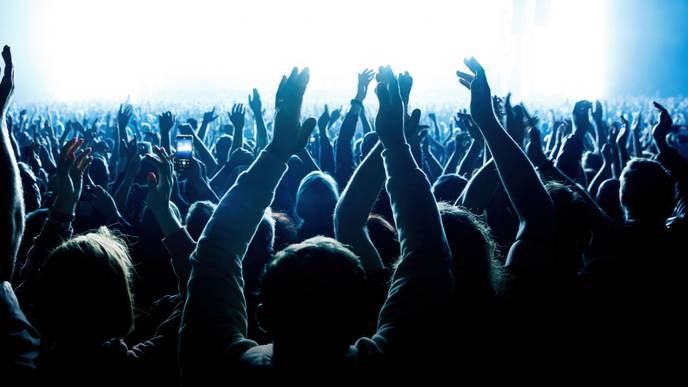
Political power depends on shared belief, and music is one of the fastest ways to create it. A song can turn individual frustration into collective emotion. When people sing together, they synchronize breath, tempo, and feeling. This physical alignment strengthens psychological unity.
That is why movements sing.
Anthems give crowds a single voice. They simplify complex grievances into something felt immediately. Words matter, but melody makes them memorable. A chant can be repeated. A song can be carried.
Protest Without Permission
One of music’s political strengths is that it can bypass authority. Songs don’t need approval to spread. They travel through memory, radio, gatherings, and now algorithms. They can be shared quietly when speech is dangerous.
In repressive contexts, music often becomes coded language. Metaphor replaces slogans. Emotion replaces instruction. Resistance hides in tone.
Quiet songs can be as threatening as loud ones.
Power Uses Music Too
Music is not only a tool of protest. It is also a tool of power. Governments use songs to build national identity, loyalty, and obedience. Ceremonial music, patriotic hymns, and military rhythms shape emotional allegiance.
Power understands sound.
Music can normalize authority, glorify sacrifice, and frame violence as noble. When repeated often enough, it becomes emotional truth rather than ideology.
Identity and Belonging
Music defines who belongs and who doesn’t. Genres become cultural markers. Certain sounds signal class, race, region, or ideology. Listening choices become political signals even when listeners don’t intend them to be.
What you listen to can place you socially before you speak.
Music creates in-groups and out-groups not through argument, but through taste.
Emotion as Political Fuel
Politics runs on emotion more than logic. Anger, hope, grief, pride, fear. Music amplifies these states efficiently. It sustains morale when action feels slow or impossible.
A movement without emotional fuel collapses.
Music keeps emotion alive between moments of action.
From Mass Anthems to Personal Resistance
Not all political music is loud. Some of the most powerful political songs are intimate. They focus on lived experience rather than ideology. They document pain, exclusion, or resilience without naming enemies.
This form of resistance humanizes rather than mobilizes.
It doesn’t tell you what to think.
It shows you what it feels like.
Why Music Persuades Better Than Argument
Arguments invite disagreement. Music invites participation. You don’t have to agree intellectually to feel something emotionally. This makes music persuasive without confrontation.
People rarely argue with a song.
They absorb it.
Censorship and Fear of Sound
Authoritarian systems often fear music more than speech. Songs linger. They are difficult to erase. They resurface in memory even when banned.
You can silence a speaker.
You can’t easily silence a melody.
This is why music is often targeted during political crackdowns.
The Digital Shift
In the digital age, political music spreads faster but competes with noise. Algorithms favor engagement, not meaning. Protest songs risk being flattened into aesthetic content.
Yet the emotional core remains.
When a song resonates, it cuts through.
Culture Is the Long Game
Laws change quickly. Culture changes slowly. Music operates at the cultural level. It reshapes how people feel about power, identity, and possibility over time.
This makes its political impact subtle but enduring.
Music doesn’t overthrow systems overnight.
It changes what people believe is worth resisting.
Why It Still Matters
In every era, songs have carried anger, hope, grief, and defiance when other forms failed. They outlast speeches. They survive defeats. They return when conditions change.
Music is political not because it tells people what to do, but because it shapes what they feel is possible.
And in politics, possibility is everything.