

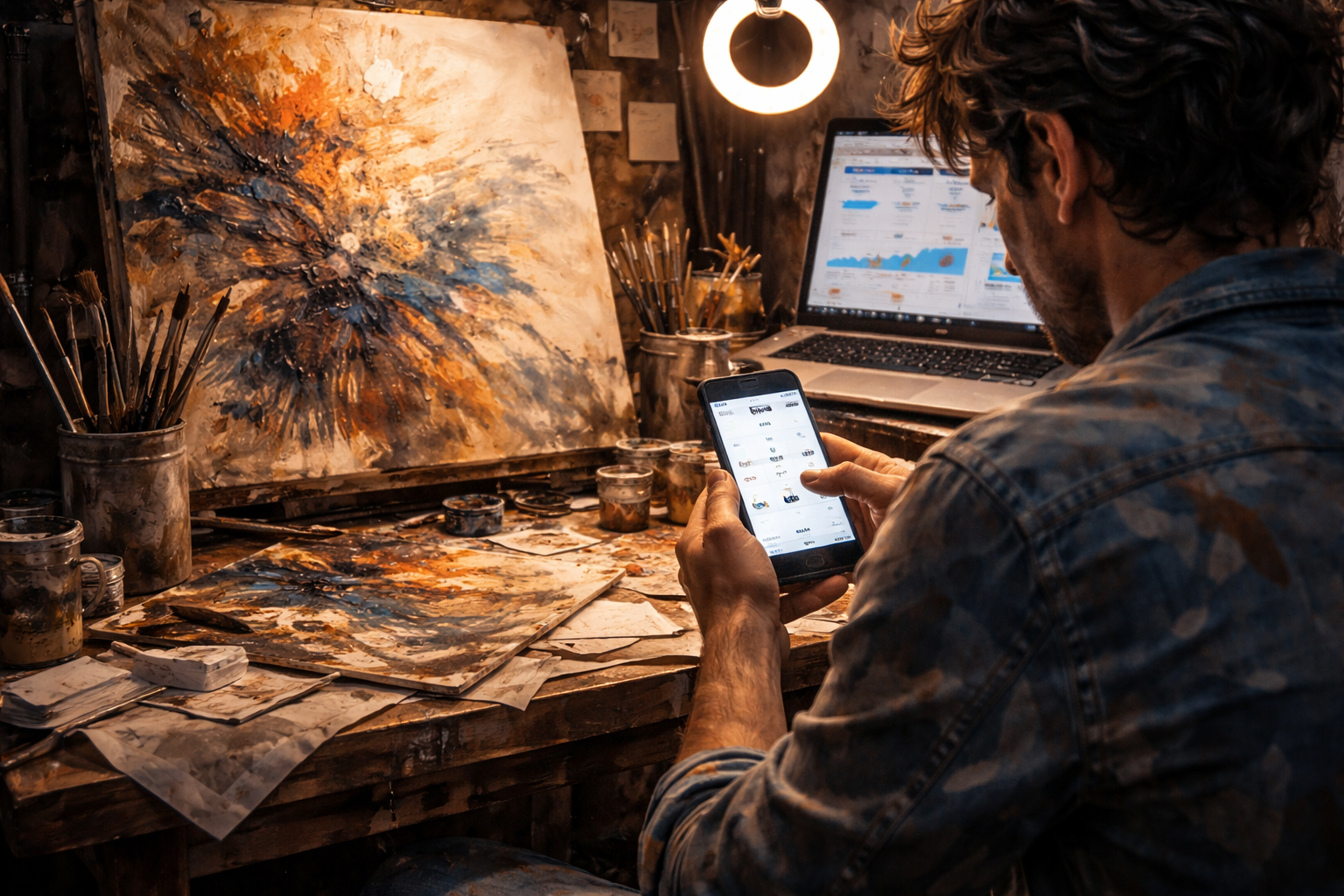
There was a time when art moved at its own pace. It emerged from necessity rather than demand, from inquiry rather than strategy. Today, much of what we encounter is no longer presented as art, but as content. The shift is subtle, but its consequences are profound. Something essential changes when creation is measured not by meaning, but by performance.
Art asks questions.
Content answers algorithms.
The Difference Is Intention
Art begins with an internal impulse. A need to explore, express, or confront something unresolved. Content begins with an external goal. Engagement, reach, consistency, relevance.
This doesn’t mean content lacks creativity. It means creativity is subordinated to outcome.
When the primary question becomes how will this perform, art quietly steps aside.
Speed Replaces Depth
Content thrives on speed. It must be frequent, responsive, and immediate. Art requires time. Time to fail, revise, doubt, and sit with uncertainty.
When production cycles shorten, depth becomes inefficient.
Reflection slows growth metrics.
Metrics as Invisible Editors
In the age of platforms, metrics function as editors. Likes, shares, saves, and watch time silently shape what gets made next. Over time, creators internalize these signals.
They stop asking what matters.
They ask what works.
This feedback loop gradually narrows creative range.
The Pressure to Be Legible
Content must be instantly understandable. It must communicate its purpose in seconds. Art often resists clarity. It invites ambiguity, confusion, and delayed understanding.
When legibility becomes mandatory, complexity suffers.
Subtlety disappears.
Consistency Over Evolution
Platforms reward consistency. A recognizable style. A predictable tone. A stable identity. But artists evolve. Their questions change. Their interests shift.
When deviation is punished, growth feels dangerous.
The artist becomes a brand manager of their past self.
Emotion as Commodity
Content often uses emotion as a hook. Shock, inspiration, outrage, relatability. These emotions are amplified, simplified, and repeated.
Art, by contrast, allows emotion to unfold naturally.
When feeling becomes a tool rather than an outcome, sincerity erodes.
The Audience Becomes a Target
Art speaks to an audience without trying to control it. Content targets an audience. It anticipates reaction, optimizes response, and adjusts accordingly.
The relationship shifts from dialogue to manipulation.
Attention becomes currency.
Why This Isn’t About Quality
High-quality content can exist. Beautiful visuals. Thoughtful ideas. Skilled execution. The issue is not craft.
The issue is orientation.
Art moves toward truth.
Content moves toward visibility.
Where Art Still Lives
Art hasn’t disappeared. It has moved to quieter spaces. Slower formats. Smaller audiences. It appears where creators allow themselves to risk confusion, irrelevance, or silence.
Art survives where metrics loosen their grip.
Where success is not immediately measurable.
The Cost of Confusion
When everything is content, art becomes harder to recognize. Audiences grow impatient. Discomfort feels like failure. Depth feels unnecessary.
But art was never meant to be efficient.
It was meant to be honest.
A Choice, Not a Death
The shift from art to content is not inevitable. It is a series of choices. By creators. By platforms. By audiences.
Choosing slowness over speed.
Meaning over metrics.
Exploration over repetition.
These choices keep art alive.
The Quiet Question
When something is made primarily to be seen, shared, and rewarded, it becomes content.
When something is made because it must exist, even without guarantee of attention, it remains art.
The difference is not visible at first glance.
It reveals itself over time.
In what lingers.
In what changes you.
In what refuses to disappear even when no one is watching.


hnn70s