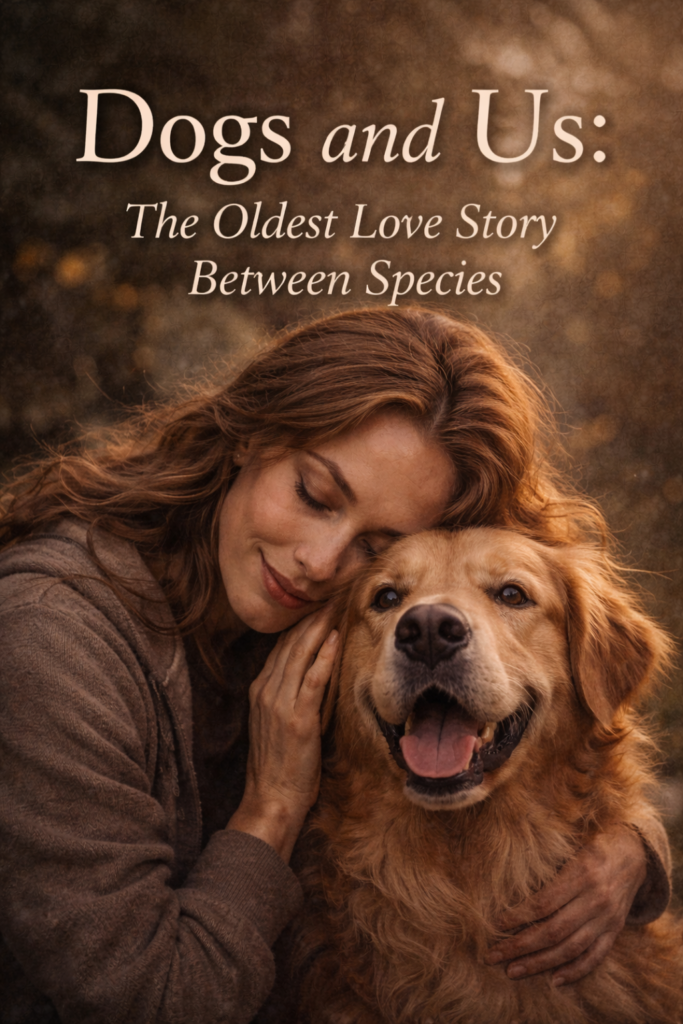


Long before cities, before written language, before art hung on walls, humans and dogs found each other. The relationship did not begin with ownership or control. It began with recognition. Two species learning to read each other’s signals, share space, and survive together.
Over thousands of years, that practical alliance transformed into something emotional, intuitive, and deeply personal.
Dogs were not simply domesticated. They co-evolved with us.
From Survival to Companionship
Early humans benefited from dogs’ heightened senses. Dogs warned of danger, helped track prey, and guarded camps at night. In return, they received food, shelter, and protection. But unlike other working animals, dogs developed something unique: emotional attunement.
Dogs learned to read human faces, gestures, tone of voice, and even mood. Studies show dogs can recognize human emotions and respond accordingly, offering closeness when we’re distressed and excitement when we’re joyful. This emotional literacy is rare in the animal world.
Over time, usefulness turned into trust. Trust turned into attachment.
Why Humans Feel So Drawn to Dogs
Humans are social beings, but we are also complex, conflicted, and often guarded. Dogs offer connection without judgment. They do not ask us to explain ourselves. They respond to presence, not performance.
Dogs provide consistency in a world that changes constantly. They celebrate our return, notice our absence, and remain emotionally available regardless of status, success, or failure. That reliability creates a sense of safety many humans struggle to find elsewhere.
There is also biology at work. Interacting with dogs increases oxytocin, the hormone associated with bonding and trust, in both humans and dogs. The connection is mutual, chemical, and deeply rooted in our nervous systems.
Dogs as Emotional Mirrors
One reason dogs feel so close to us is because they reflect us. An anxious owner often has an anxious dog. A calm household tends to raise calm animals. Dogs absorb emotional environments and respond to them honestly.
This mirroring makes dogs powerful companions for healing. They ground people experiencing grief, trauma, loneliness, or mental health struggles. Service dogs, therapy dogs, and emotional support dogs don’t just perform tasks. They offer regulation, presence, and nonverbal reassurance.
In many cases, dogs teach humans how to feel again.
Modern Life, Ancient Bond
Today, dogs live in apartments, sleep in beds, wear jackets, and have birthday parties. But beneath modern habits lies an ancient connection. Dogs still look to humans for guidance. Humans still find comfort in a dog’s quiet loyalty.
Even as technology reshapes how we connect with one another, dogs remain refreshingly uncomplicated. They exist fully in the present. They forgive quickly. They love without agenda.
What Dogs Give Us, and What We Give Them
Dogs ask for care, patience, and responsibility. In return, they give companionship, structure, and meaning. For many people, dogs create routine. They get us outside. They remind us to pause. They anchor us to daily life.
The relationship is not perfect. It requires commitment and empathy. But that may be why it works so well. Dogs don’t replace human relationships. They deepen our capacity for them.
At its core, the bond between dogs and humans is not about control or convenience. It is about shared existence. Two species choosing, again and again, to walk forward together.
Not because they have to.
But because they want to.