


Exclusive Interview with Drew Kelly – Filmmaker
Drew Kelly is an Australian independent wildlife filmmaker and the founder of WildLive Media, dedicated to capturing the extraordinary wildlife found along Australia’s coastline and inspiring a deeper connection between people and the natural world.
After a successful 25-year career in IT, cloud technology, and senior operational management, Drew made the bold decision to follow his lifelong passion for wildlife, photography, and the ocean, transforming it into a full-time filmmaking career.
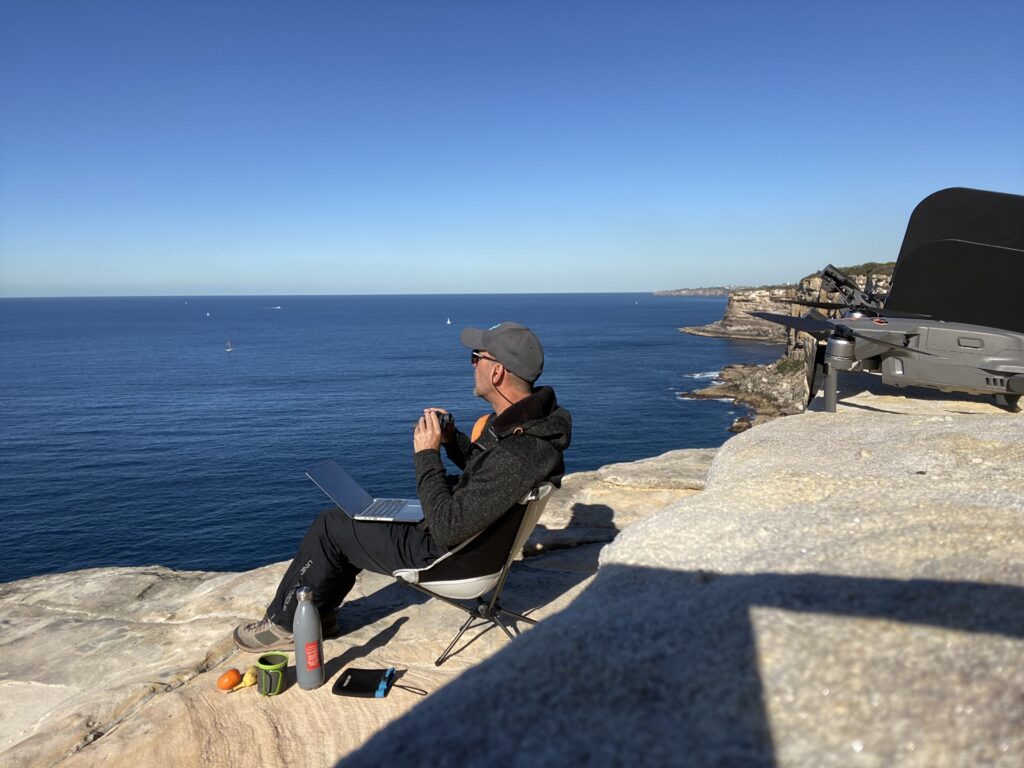
Working independently and largely self-funded, Drew has spent years traveling Australia’s coastline in pursuit of remarkable wildlife encounters, often living from a specially equipped van that allows him to remain in remote coastal locations for extended periods. Whales have become the defining focus of his work.
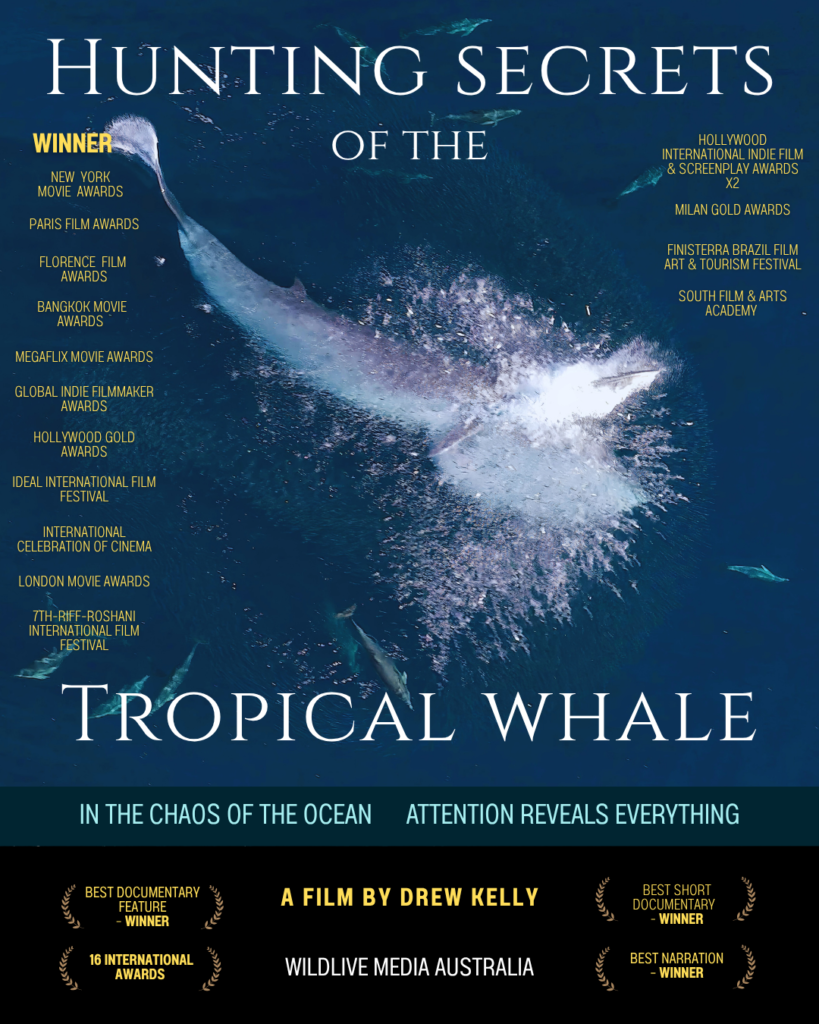
His acclaimed feature documentary, Hunting Secrets of the Tropical Whale, filmed primarily along Australia’s Sapphire Coast, follows the elusive Bryde’s whale and captures rare feeding behaviors and interactions that few people have ever witnessed. Rather than presenting a traditional nature documentary, Drew invites audiences to experience the wonder, unpredictability, and emotion of encountering these magnificent animals in the wild.
The film has received multiple international awards and official selections at film festivals, bringing global attention to one of Australia’s lesser-known marine species.
As an independent filmmaker, Drew personally undertakes much of the cinematography, drone operation, editing, narration, and post-production, giving his documentaries a distinctive and highly personal style. His work has expanded beyond the Sapphire Coast, following whale migrations along Australia’s eastern seaboard and into the South Pacific using aerial, underwater, and drone cinematography.
Currently, Drew is filming his next wildlife documentary while continuing his mission through WildLive Media to inspire audiences not only to admire wildlife, but to appreciate and protect the natural world for generations to come.
NY Glamour Magazine: After spending 25 years in IT, cloud technology, and senior operational roles, you made the bold decision to pursue wildlife filmmaking full-time. What inspired you to take such a life-changing leap, and how did you know it was the right time?
Drew: I don’t think there was one moment when I suddenly decided to become a wildlife filmmaker. Photography, wildlife and the ocean had always been part of my life, but for 25 years my professional world was technology, IT and senior operational management. Eventually I reached a point where I realised that success and fulfilment aren’t necessarily the same thing. I had spent a large part of my life building businesses, managing people and solving problems, and I wanted the next part of my life to be about creating something that genuinely mattered to me. Wildlife filmmaking began almost as an extension of photography, but once I started spending serious time in the field, particularly around whales, it became something much bigger. There is an extraordinary feeling when something happens in front of you that perhaps only a handful of people have ever witnessed, and you realise you have captured it in a way that can allow thousands of other people to experience it. I didn’t leave one career with a perfectly constructed plan for another. I took a calculated risk and backed myself. Ironically, many of the skills from my previous career — problem solving, technology, logistics, persistence and being prepared to make decisions independently — turned out to be incredibly useful in filmmaking.
NY Glamour Magazine: Your work is deeply connected to Australia’s coastline and its remarkable marine life. What is it about the ocean that continues to inspire your creativity and passion as a filmmaker?
Drew: The ocean is one of the few places where we still don’t really know what is going to happen next. You can spend hours looking at what appears to be an empty stretch of water and then, in seconds, everything changes. A whale surfaces, birds begin diving, baitfish erupt and suddenly there is an entire ecosystem unfolding in front of you. That unpredictability is addictive for a filmmaker. Australia also has an extraordinary coastline. I can live and work beside it for extended periods, following changes in weather, currents, bird activity and whale movements rather than arriving somewhere for a predetermined shooting schedule. I think that changes what you see. When you give nature enough time, you stop simply collecting beautiful images and start witnessing stories.
NY Glamour Magazine: Your award-winning documentary Hunting Secrets of the Tropical Whale captures behaviors that few people have ever witnessed. What was the most unforgettable moment you experienced while filming this extraordinary project?
Drew: There were many extraordinary encounters, and the feeding strategies of Bryde’s whales are endlessly mesmerising. They don’t strike vertically through a bait ball. They accelerate towards it and cut through the surface from the side almost like a knife, engulfing enormous quantities of fish in a single charge. But one encounter in particular captures for me what filming in the wild is really about. I was filming two Bryde’s whales coordinating their attack on a huge school of fish. With two whales working together, the spectacle isn’t simply doubled — everything intensifies. The ocean erupts with fleeing fish, diving seabirds and two enormous whales charging through the surface in a precisely timed assault. And then something happened that nobody could have anticipated. A seal became caught up in the mayhem. Surrounded by fleeing fish and birds, and suddenly confronted by the gaping mouths of the whales, it launched itself clear of the water — only to head-butt one of the whales squarely on the back. It was an extraordinary, almost comical moment in the middle of an incredibly dramatic hunt, and one I could never have planned or scripted. For me, that moment represents what the wild really looks and feels like. You can spend hundreds of hours learning to recognise patterns of behaviour and anticipating what might happen next, but nature can suddenly throw something completely unexpected into the frame. That’s why I keep going back. The greatest scenes are often the ones you could never have imagined writing.
NY Glamour Magazine: Wildlife filmmaking often requires incredible patience, with hours or even days of waiting for just a few minutes of action. What has this process taught you about nature, perseverance, and yourself?
Drew: It has taught me that nature has absolutely no interest in my production schedule! You can have perfect equipment, perfect weather and a carefully planned day, and nothing happens. Then on the day when conditions look completely wrong, something extraordinary unfolds. I have spent countless hours watching apparently empty water. But I’ve learned that those hours aren’t necessarily wasted. You begin noticing things — changes in bird behaviour, the movement of baitfish, weather, currents and subtle patterns that might indicate something is about to happen. Perhaps the biggest lesson has been that patience isn’t passive. You have to remain observant and ready. Wildlife doesn’t give you a second take. When that extraordinary ten seconds finally happens, you need to have spent the previous ten hours preparing for it.
NY Glamour Magazine: As an independent filmmaker, you personally handle much of the cinematography, drone work, editing, and narration of your documentaries. How does maintaining creative control influence the stories you tell?
Drew: Creative control is probably the greatest advantage I have as an independent filmmaker. I’m not working from a production formula where I have to return with a predetermined sequence of shots or force what I encounter into a story that was written months earlier. I can spend time in a place, observe what is actually happening and allow the story to evolve from what nature gives me. Because I shoot much of the material myself, fly the drones, edit the footage and provide the narration, there is a continuity between what I experience in the field and what the audience eventually experiences on screen. That’s enormously important to me. And it isn’t always about the largest or most spectacular animal. It might be a whale exploding through a school of fish, a platypus quietly breaking the surface of a river, the movement of water, the sound of wind through a landscape, or simply the changing light across the ocean. Those moments are all part of the same natural world. I also don’t believe every image needs to be explained. Sometimes narration should disappear completely and allow the cinematography, natural sound and music to create the connection. Ultimately, I’m trying to make the audience feel something rather than simply tell them something. If, for a little while, they stop being an observer watching a nature documentary and instead feel immersed in the natural world themselves, then I’ve achieved what I set out to do.
NY Glamour Magazine: Your films allow viewers to experience wildlife through your own perspective rather than through a traditional natural-history format. What kind of emotional connection do you hope audiences develop after watching your documentaries?
Drew: Wonder. Before conservation, before education and before somebody decides that an animal or ecosystem is worth protecting, I think there usually has to be an emotional connection. I want somebody sitting thousands of kilometres from the Australian coast to experience some small part of what I felt when I first saw that whale appear beneath me. I don’t want to tell an audience that they should care. I would rather show them something extraordinary and allow them to discover that feeling themselves. If someone finishes one of my films wanting to know more about these animals, wanting to see them in the wild, or simply looking at the ocean differently the next time they stand beside it, then I think the film has achieved something.
NY Glamour Magazine: Modern filmmaking technology, including drones and compact cinema equipment, has transformed wildlife storytelling. How have these innovations expanded the possibilities for independent filmmakers like yourself?
Drew: Technology has democratised wildlife filmmaking in an extraordinary way. Twenty years ago, many of the images I can now capture independently would have required a helicopter, a specialist camera crew and a production budget completely beyond my reach. Today I can carry incredibly capable cameras, drones and audio equipment with me into remote locations and be filming within minutes. But technology by itself doesn’t create the image. A drone can give you an extraordinary perspective, but you still need to understand light, movement, composition and, most importantly, where to put the camera before something happens. My background in technology probably makes me unusually comfortable pushing new equipment quite hard. I’m constantly experimenting with what these tools allow me to do. The exciting part isn’t having the newest camera. It’s reaching a point where the technology almost disappears and allows one person in the field to tell a story that previously required an entire production unit.
NY Glamour Magazine: Following whales along Australia’s eastern coastline and into the South Pacific requires both technical expertise and a deep understanding of animal behavior. How do you prepare for these unpredictable encounters in the wild?
Drew: Preparation is a combination of research, experience and making sure that when luck finally arrives, you’re ready for it. I study whale movements, weather, ocean conditions and reports of activity, but a lot also comes from simply spending time in the environment. After enough hours on the coast, you start noticing subtle signs — particularly bird activity and changes at the surface — that can tell you something is happening. I also prepare technically for failure. Batteries are charged, cameras are ready, storage is duplicated and I usually have alternative ways of capturing an encounter because wildlife rarely waits while you solve an equipment problem. At the same time, I try to be careful about claiming that I understand exactly why a whale is behaving in a particular way. Observation and interpretation are different things. One of the great attractions of whales is how much remains unknown. Sometimes the most interesting answer is: we don’t know yet.
NY Glamour Magazine: Your documentaries have received international recognition while remaining entirely independent productions. What challenges have you faced working outside the traditional studio system, and what advantages has that independence given you?
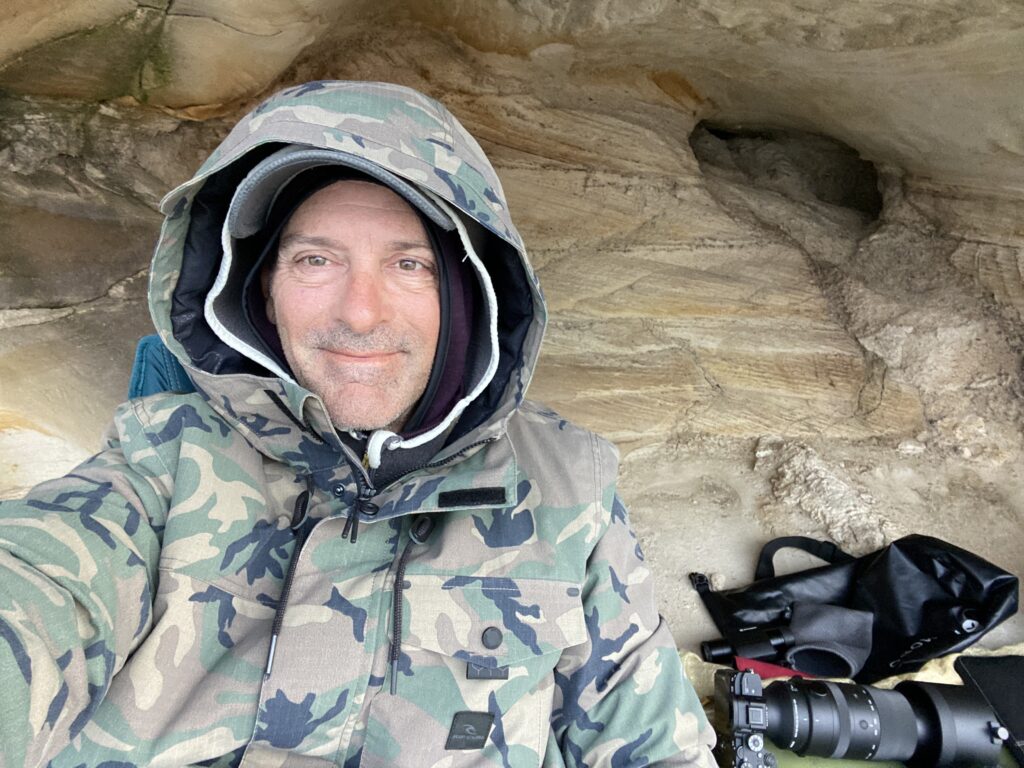
Drew: One of the greatest challenges is simply being taken seriously as an independent filmmaker. It is incredibly difficult to attract meaningful funding in this industry without the backing of an established production company or broadcaster. There can be an assumption that if you’re independent, somehow the work itself carries less credibility — regardless of what you’ve actually captured or achieved. That creates a difficult cycle. Without funding, it’s much harder to grow a production, employ other talented people and build the larger team that can take the work to another level. Yet gaining that funding often depends on already having those industry structures around you. And independence is expensive. I’m funding much of the travel, equipment and extended time in the field myself, followed by the enormous amount of work involved in editing, music, sound, festivals and ultimately finding an audience for the finished film. But the other side of independence is freedom, and I value that enormously. I don’t have to justify spending another week somewhere because I believe something extraordinary may happen. I don’t have to abandon an encounter because a production schedule says we’ve finished at that location. I can give nature the time it requires rather than asking nature to fit my timetable. That freedom was fundamental to Hunting Secrets of the Tropical Whale. Much of the film exists precisely because I could keep returning to the ocean, watching, waiting and allowing the story to reveal itself. The international festival recognition has therefore been particularly satisfying. The film began with one independent filmmaker and a determination to honour the extraordinary things I had been privileged to witness by bringing them to a larger, more mature audience. We live in a world increasingly dominated by the quick hit of social media — spectacular wildlife reduced to a few seconds before we swipe to the next thing. I want to move in the opposite direction. I want to give audiences permission to sit with an experience, to watch, listen and become absorbed in it. I think we’ve lost some of our ability to simply sit in patience and wonder. Perhaps part of what I’m trying to do with these films is give a little of that back.
NY Glamour Magazine: Through WildLive Media, you hope your films inspire people to reconnect with nature. Why do you believe storytelling can play such an important role in wildlife conservation and environmental awareness?
Drew: Facts are important, but facts alone don’t always make people care. Stories can. When people emotionally connect with an individual animal, a landscape or a moment in the natural world, conservation stops being an abstract concept. That’s why I don’t want my documentaries to feel like lectures. I want audiences to experience wildlife first — to see the scale, beauty, intelligence, vulnerability and sometimes sheer spectacle of these animals. Once somebody has felt that connection, the environmental message doesn’t necessarily need to be shouted. If we can make people fall in love with the natural world, protecting it becomes a much more personal idea.
NY Glamour Magazine: You are currently working on your next documentary focused on whales and Australia’s eastern coastline. Without revealing too much, what can audiences look forward to in this exciting new project?
Drew: I’m deliberately keeping this project fairly close at the moment because it is still evolving through what I’m discovering in the field. What I can say is that it is considerably more ambitious. I’ve been following the whale season over thousands of kilometres of Australia’s eastern coastline and beyond, filming the migration from very different perspectives and spending time with people whose lives have developed an extraordinary connection with these animals. But the whales remain at the centre of the story. I’m interested not only in showing audiences extraordinary behaviour, but in exploring something more fundamental: why do these animals have such a profound effect on us? Visually, I’m pushing the cinematography further as well — from aerial perspectives to the surface and beneath it — and some of what we’ve already captured has surprised even me. I’m still discovering what the final film will become, and that’s exactly how I want it.
NY Glamour Magazine: Looking back on your remarkable journey from the corporate world to becoming an internationally recognized wildlife filmmaker, what advice would you give to those who dream of following their passion but are afraid to leave the security of their current career?
Drew: I wouldn’t tell everybody to resign tomorrow and follow their dream. That’s a wonderful line for a motivational poster, but life is more complicated than that. What I would say is don’t automatically assume that because you’ve spent 20 or 30 years becoming good at one thing, you’re obliged to spend the rest of your life doing it. Skills transfer. Experience transfers. Curiosity certainly transfers. Starting again later in life can actually be liberating because you know yourself better. You know what you’re prepared to sacrifice and, perhaps more importantly, what you’re no longer prepared to sacrifice. There will never be a completely safe moment to make a major change. At some point you have to accept that uncertainty is part of the decision. For me, the greater risk eventually became looking back and wondering what might have happened if I’d tried. I would much rather have a few spectacular failures pursuing something I genuinely care about than spend the rest of my life wondering whether I could have done it.
WildLive Media – Connecting with Nature https://www.youtube.com/channel/UCFHui56ZaTgRpKhFNZ0gyxQ
imdb – https://www.imdb.com/title/tt39986502/?ref_=nm_knf_t_1

