

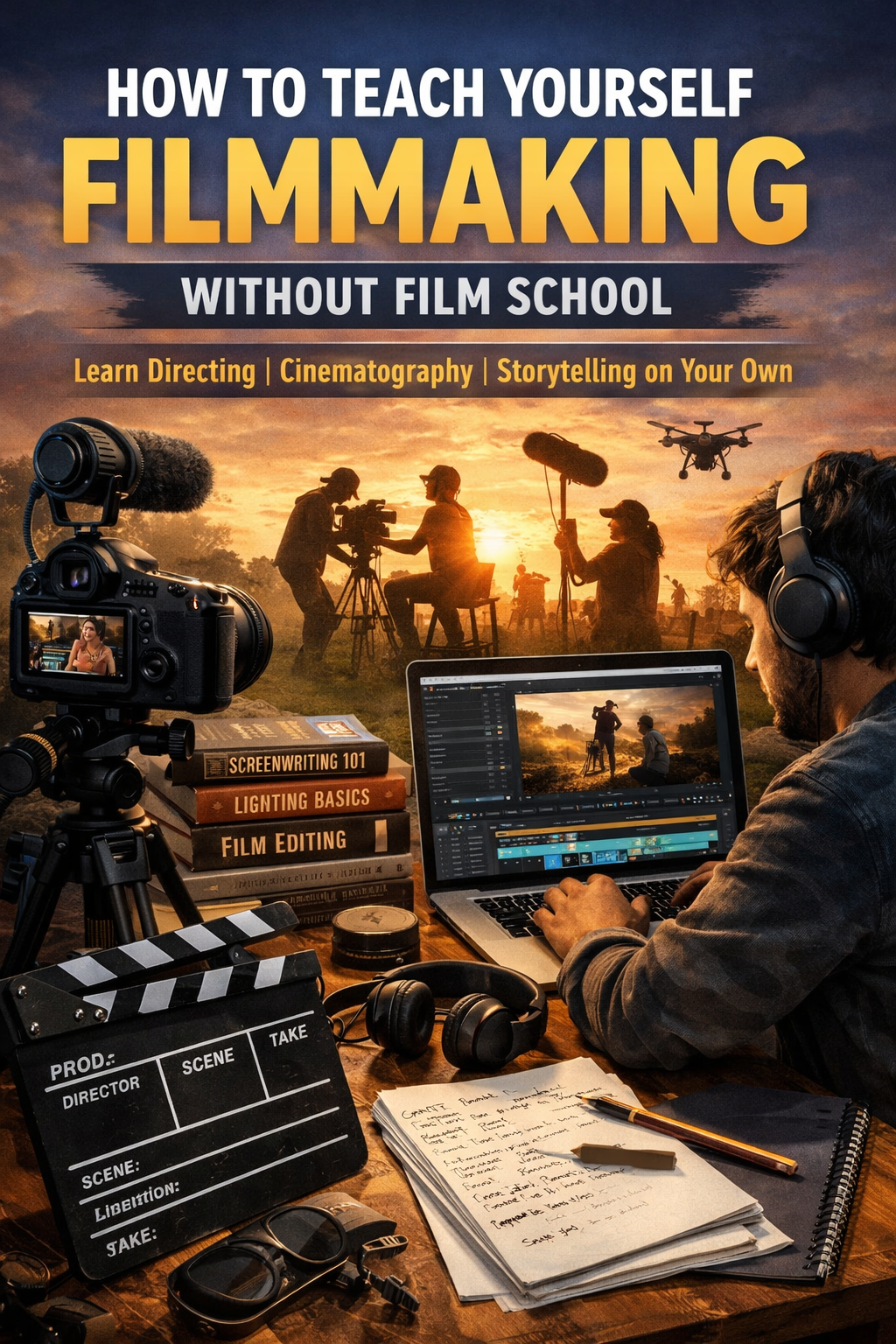
A step-by-step guide to learning directing, cinematography, and storytelling using free tools, online resources, and hands-on practice
For decades, filmmaking felt guarded by gates. Film schools, expensive cameras, insider connections. Today, those gates are mostly decorative. Stories are being shot on phones, edited on laptops, and premiered at festivals by people who never stepped inside a lecture hall. Teaching yourself filmmaking is no longer a fallback plan. It is a real path, and often a sharper one.
This guide breaks filmmaking down into learnable pieces, showing how to build skills through practice, curiosity, and discipline rather than tuition and theory-heavy classrooms.
Start With Story, Not Equipment
Most beginners make the same mistake: they obsess over cameras before understanding stories. Film is not technology-first. It is emotion-first.
Begin by watching films actively. Pause scenes. Ask why a moment works. Notice how information is revealed visually instead of through dialogue. Study short films as much as features. They are compact lessons in storytelling efficiency.
Then write constantly. Short scenes, one-page scripts, silent sequences. Use free screenwriting tools like WriterDuet or Celtx. Focus on clarity, stakes, and character desire rather than perfection. A strong story shot on basic equipment will always outperform a weak story shot beautifully.
Learn Directing by Doing, Not Reading
Directing is decision-making under pressure. No book fully prepares you for that.
Start small. Direct scenes with friends. One room, one conflict, one objective. Learn how blocking changes emotion. Learn how silence can speak louder than dialogue. Practice explaining ideas clearly to actors, even when you are unsure yourself.
Record rehearsals. Watch them back. Notice when performances feel alive and when they feel stiff. Directing improves fastest when you see your own mistakes without ego.
Online masterclasses, interviews, and behind-the-scenes footage are invaluable, but they only make sense after you have struggled a little yourself. Experience sharpens understanding.
Teach Yourself Cinematography With Constraints
You do not need multiple lenses or expensive lighting kits to learn cinematography. Constraints are teachers in disguise.
Use one camera. Even a phone. Learn framing, movement, and composition first. Practice shooting the same scene in multiple ways: wide, medium, close. Observe how emotional emphasis changes.
Natural light is your classroom. Shoot at different times of day. Notice how shadows behave. Learn where to place subjects near windows. Study contrast, not brightness.
Free resources like YouTube breakdowns and cinematography blogs become far more powerful when paired with experimentation. Watch a tutorial, then recreate it with whatever you have. Learning happens in the attempt, not the view count.
Edit Like a Storyteller, Not a Technician
Editing is where films discover their true shape.
Start with free software such as DaVinci Resolve or HitFilm. Learn basic cuts, pacing, and sound balance before touching effects. Focus on rhythm. Ask where the scene breathes and where it drags.
Edit the same scene in multiple versions. Fast. Slow. Silent. Music-driven. You will quickly understand how editing controls emotion more than any camera move.
Sound matters more than most beginners realize. Clean dialogue, ambient noise, and silence often define professionalism more than visuals. Train your ear early.
Build a Habit of Making, Not Waiting
The most dangerous trap for self-taught filmmakers is waiting until they feel “ready.” Readiness is a myth.
Set deadlines. Finish projects, even when they feel imperfect. Short films teach faster than endless planning. Every finished piece becomes a lesson and a calling card.
Share your work. Feedback will sting sometimes, but it sharpens instincts. Learn to separate your identity from your output. Growth lives in that space.
Use Free Communities and Festivals as Classrooms
Online forums, filmmaking groups, and local meetups function like decentralized film schools. Ask questions. Offer help. Collaborate.
Submit your work to festivals, even small ones. The submission process alone teaches discipline, formatting, and audience awareness. Rejections teach resilience. Selections teach confidence. Both matter.
Watch other filmmakers’ shorts and trailers critically. The community itself becomes part of your education.
Understand That Teaching Yourself Is a Long Game
Self-taught does not mean self-isolated. It means self-directed.
You will learn unevenly. Some skills will leap ahead while others lag behind. That is normal. The goal is progress, not mastery.
Film school offers structure. Teaching yourself offers freedom. When paired with consistency and curiosity, that freedom can lead to a voice that feels original rather than manufactured.
In the end, filmmaking has always belonged to those willing to observe deeply, practice relentlessly, and tell stories even when no one is watching. The classroom is everywhere now. The only requirement is that you start. 🎬



k4ambs