

From Cold War Aviation Experiments to the Origins of Modern UFO Myths
Few places on Earth have inspired as much speculation as Area 51. For decades, it was officially denied, absent from maps, and surrounded by armed warnings that only deepened public curiosity. To many, it became synonymous with extraterrestrials and hidden spacecraft.
The reality, while less otherworldly, is no less fascinating.
What truly happened inside Area 51 reveals how secrecy, cutting-edge technology, and public imagination combined to create the most powerful UFO mythology of the modern era.
Why Area 51 was created
Area 51 emerged during the Cold War, a period defined by fear, speed, and technological urgency. The United States needed a place remote enough to test experimental aircraft far from foreign spies and civilian eyes.
Groom Lake, a dry salt lake in Nevada, was ideal. Isolated, flat, and surrounded by mountains, it offered natural secrecy long before satellites could see everything.
The mission was simple: develop aircraft the enemy must never know about.
Aircraft that looked nothing like airplanes
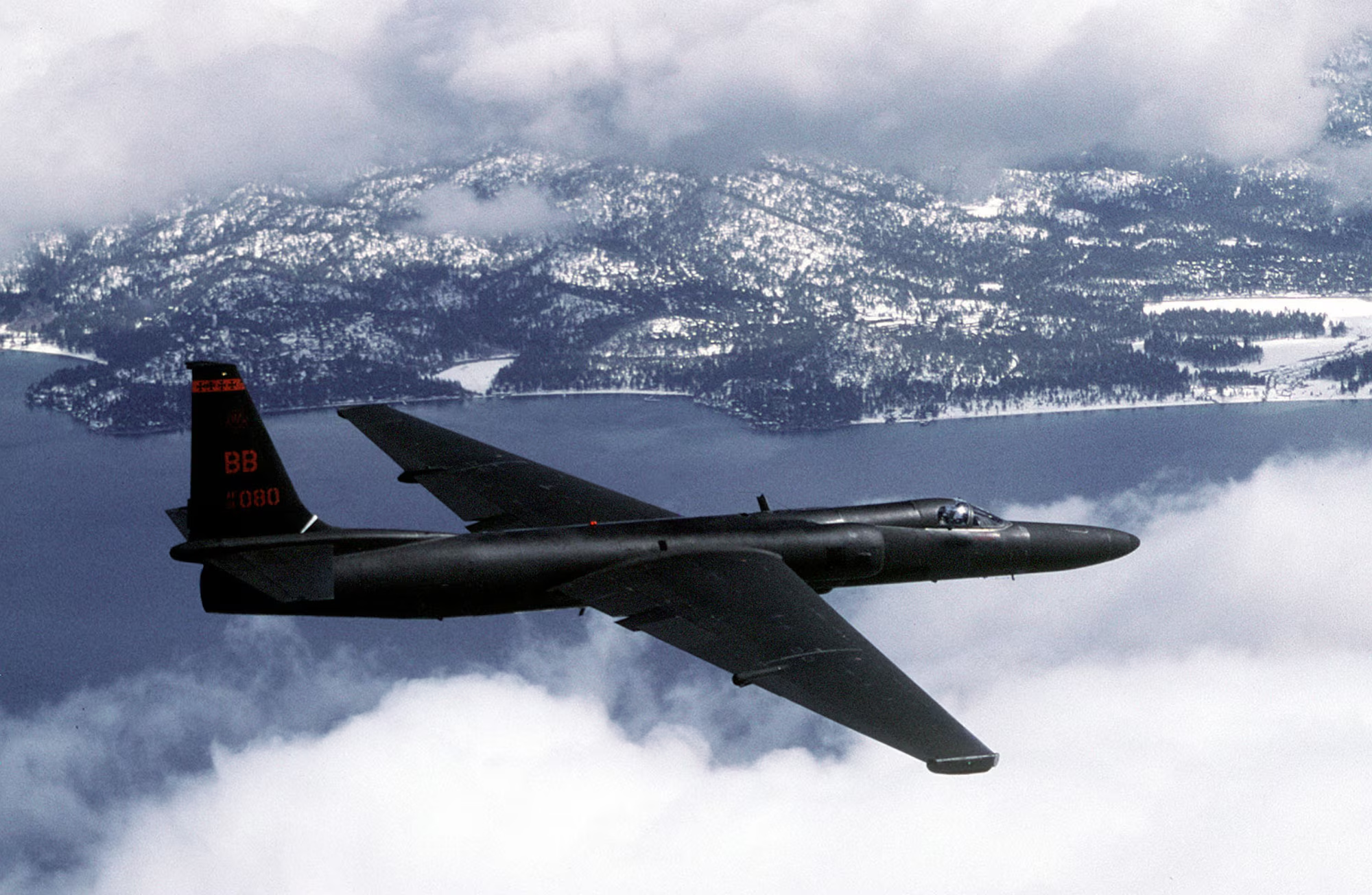
The first major program tested there was the U-2 spy plane. Flying far higher than any commercial or military aircraft of its time, it appeared to ground observers as a slow-moving, reflective object at extreme altitude.
People reported seeing something impossible.
Later came even stranger designs. The A-12 and SR-71 Blackbird, capable of speeds and altitudes unimaginable in the 1960s, left no conventional explanation for witnesses below. Sharp angles, black silhouettes, and sonic booms added to the confusion.
To civilians, these were not planes.
They were UFOs.
And the government did nothing to correct the assumption.
Secrecy that fed the myth
Correcting UFO reports would have required revealing classified technology. That was not an option.
Instead, officials allowed alien speculation to flourish. It was safer for adversaries to believe Americans were chasing little green men than to understand the capabilities of U.S. reconnaissance aircraft.
This silence became fuel.
Every unexplained sighting, every denial, every restricted airspace sign reinforced the idea that something extraordinary was hidden behind the fences.
When “we can’t tell you” became suspicious
Area 51 was not publicly acknowledged until decades after its most critical missions were completed. For years, even former employees could not confirm they had worked there.
This prolonged denial damaged trust.
When the government finally admitted the base existed, many people assumed the truth must be even stranger than rumors suggested. If they lied about the base, what else were they lying about?
Secrecy, once necessary, became self-defeating.
What Area 51 did not contain
Despite popular belief, there is no credible evidence that Area 51 housed alien bodies, crashed spacecraft, or reverse-engineered extraterrestrial technology.
Investigations, declassified documents, and firsthand accounts consistently point to human-made experimental aircraft and weapons systems.
That doesn’t mean everything has been revealed. It means what was hidden was terrestrial, not cosmic.
Why UFO myths persist
Area 51 became a symbol, not just a location.
It represents mistrust of authority, fear of the unknown, and the belief that powerful institutions hide truths from the public. UFO mythology filled the gaps left by classified information and cultural anxiety.
The myths endured because they answered emotional questions, not factual ones.
People weren’t asking what was flying overhead.
They were asking who was in control.
Modern acknowledgment and lingering mystery
Today, satellites map Area 51 openly. The base still operates, still restricted, still classified in parts. But the age of total invisibility is over.
Ironically, the less secret it becomes, the more mythical its reputation remains.
Area 51 no longer needs aliens to fascinate. Its real history, a crucible of innovation that reshaped global surveillance and warfare, is compelling enough.
What really happened inside Area 51
Area 51 was not a gateway to other worlds.
It was a workshop for human ambition under extreme pressure. A place where technology leapt forward faster than public understanding could follow.
UFO myths weren’t born from visitors from the stars.
They were born from secrecy, speed, and silence.
And in that sense, Area 51 didn’t just test aircraft.
It tested the limits of trust between governments and the people watching the skies.