
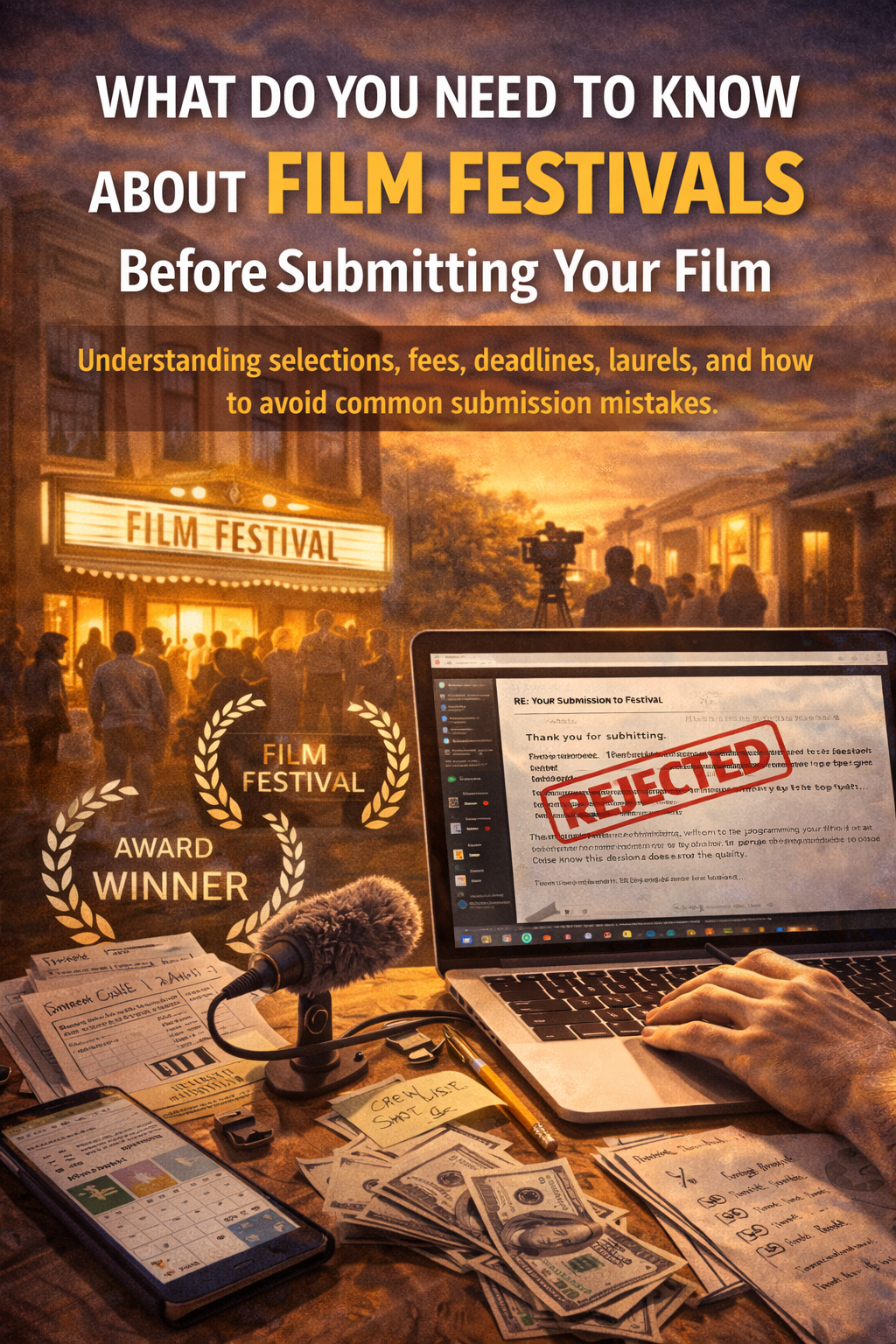
Understanding selections, fees, deadlines, laurels, and how to avoid common submission mistakes
Submitting a film to festivals can feel like sending your work into a fog. You upload, you pay, you wait. Weeks or months later, an email arrives that either validates years of effort or leaves you wondering what went wrong. Most frustration around festivals does not come from rejection. It comes from misunderstanding how festivals actually work.
Knowing the system before you submit saves money, time, and emotional energy.
Understand What “Selection” Really Means
A festival selection does not mean the same thing everywhere.
Some festivals program only a handful of films and screen them publicly with full schedules, audiences, and industry presence. Others accept large numbers of films and operate primarily online or through limited screenings.
Neither model is inherently bad, but you need to know which one you are submitting to. Read the festival’s past programs. Look at venues, photos, and screening schedules. A real festival leaves a visible trail.
Selection means your film fits their programming goals, not that it is the best film ever made. Rejection often means timing, category limits, or theme mismatch.
Submission Fees Are Not Quality Guarantees
Paying a fee does not buy legitimacy.
Fees cover administrative costs, platforms, staff time, and sometimes venue expenses. High fees do not equal prestige, and low fees do not mean low quality.
Be strategic. Decide how much you can realistically spend overall. Prioritize festivals that align with your film’s genre, length, and audience.
Avoid submitting blindly to dozens of festivals just to feel active. Thoughtful submissions outperform volume.
Deadlines Matter More Than You Think
Early deadlines are not just cheaper. They are strategic.
Films submitted early are often viewed with less fatigue. Programmers are fresher, and programming slots are more open. Late submissions compete for fewer remaining spots.
Create a submission calendar. Track deadlines, notification dates, and premiere requirements. Missing a deadline can disqualify your film entirely.
Organization here separates professionals from hopefuls.
Know What Laurels Represent and What They Don’t
Laurels are symbols, not guarantees.
An official selection laurel indicates acceptance. Awards laurels indicate recognition within that festival. Neither automatically translates to distribution, press, or career advancement.
Be honest about how you use laurels. Never claim awards you did not receive. Never design fake laurels. This damages credibility quickly.
A few meaningful selections carry more weight than dozens of obscure ones.
Avoid Common Submission Mistakes
Many films are rejected before they are even judged creatively.
Poor sound quality is the fastest rejection trigger. Technical issues signal unpreparedness. Make sure your film plays correctly, subtitles work, and links are active.
Do not submit unfinished films unless explicitly allowed. Festivals expect completed works.
Read category rules carefully. Submitting a 25-minute film to a festival with a 15-minute short limit wastes money.
Never ignore premiere status requirements. Some festivals require national, regional, or world premieres. Violating this can lead to disqualification even after selection.
Understand That Festivals Are Curated, Not Democratic
Festivals are not talent competitions. They are curated programs.
Programmers build balanced lineups. They consider diversity of tone, geography, theme, and length. Your film may be strong and still not fit that year’s vision.
Rejection is not a verdict on your ability. It is often a programming decision.
Treat programmers as collaborators, not gatekeepers.
Have a Clear Festival Strategy
Ask yourself why you are submitting.
Are you building a premiere? Seeking awards? Targeting networking? Preparing for distribution? Different goals require different festival paths.
Not every film belongs at every festival. A horror short, an experimental piece, and a social documentary each have different homes.
A clear strategy prevents burnout and disappointment.
Film festivals can amplify your work, but only when approached with knowledge and intention. Submitting blindly leads to frustration. Submitting wisely turns festivals into allies rather than obstacles.
Your film already exists. Submitting it thoughtfully is how you give it the best chance to be seen. 🎬