

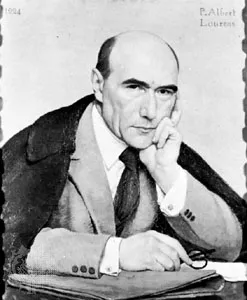
André Gide believed that honesty was more important than approval.
Born in Paris in 1869, Gide emerged as one of the most intellectually fearless writers of modern French literature. Novelist, essayist, diarist, and critic, he spent his life questioning moral conventions, social expectations, and even his own beliefs. Where many writers sought coherence, Gide embraced contradiction. For him, truth was not fixed. It was something to be pursued relentlessly, even when it unsettled everyone involved.
At the center of Gide’s work is freedom. Personal, moral, and intellectual. He rejected rigid doctrines and warned against any system, religious, political, or cultural, that demanded obedience over self-examination. His writing often explores the tension between desire and duty, sincerity and hypocrisy, liberation and responsibility.
Gide’s novels are psychological laboratories. In works like The Immoralist and The Counterfeiters, characters confront the consequences of living honestly in societies built on repression and performance. Gide does not judge his characters. He exposes them. Their struggles reflect his own lifelong battle to reconcile inner truth with external morality.
What made Gide especially controversial was his refusal to hide behind fiction. His journals and essays openly examined his doubts, desires, failures, and evolving convictions. At a time when conformity was rewarded, Gide insisted on transparency. This courage came at a cost. He faced public backlash, censorship, and moral condemnation, yet he never retreated into silence.
Gide was also politically engaged, though never blindly loyal. He supported causes passionately and later criticized them just as fiercely when they betrayed human dignity. His willingness to revise his beliefs publicly demonstrated rare intellectual integrity. To Gide, changing one’s mind was not weakness. It was growth.
Awarded the Nobel Prize in Literature in 1947, Gide was recognized not only for his literary innovation, but for his moral courage. The Nobel committee praised his work for its “fearless love of truth,” a phrase that captures his legacy precisely.
André Gide did not offer comfort. He offered clarity sharpened by doubt. His writing invites readers to examine their own lives with the same rigor, to distrust easy answers, and to accept that freedom carries responsibility.
Gide’s legacy endures because he reminds us that literature is not meant to reassure us of who we are, but to challenge us to become more honest versions of ourselves.




wpr1pq