
The Suitcase That Saves You
Travel is built on optimism. We pack for beaches, meetings, reunions, adventures. What we rarely pack for is disruption. Delayed flights, lost luggage, food poisoning, power outages, sudden illness, unfamiliar pharmacies, or language barriers can turn a simple trip into a stressful ordeal within hours. A travel survival kit is not about expecting disaster. It is about protecting your health, autonomy, and calm when convenience disappears.
A good travel survival kit fits in a backpack or carry-on and focuses on health first, because when your body fails, everything else follows.
Start With Medications You Cannot Afford to Lose
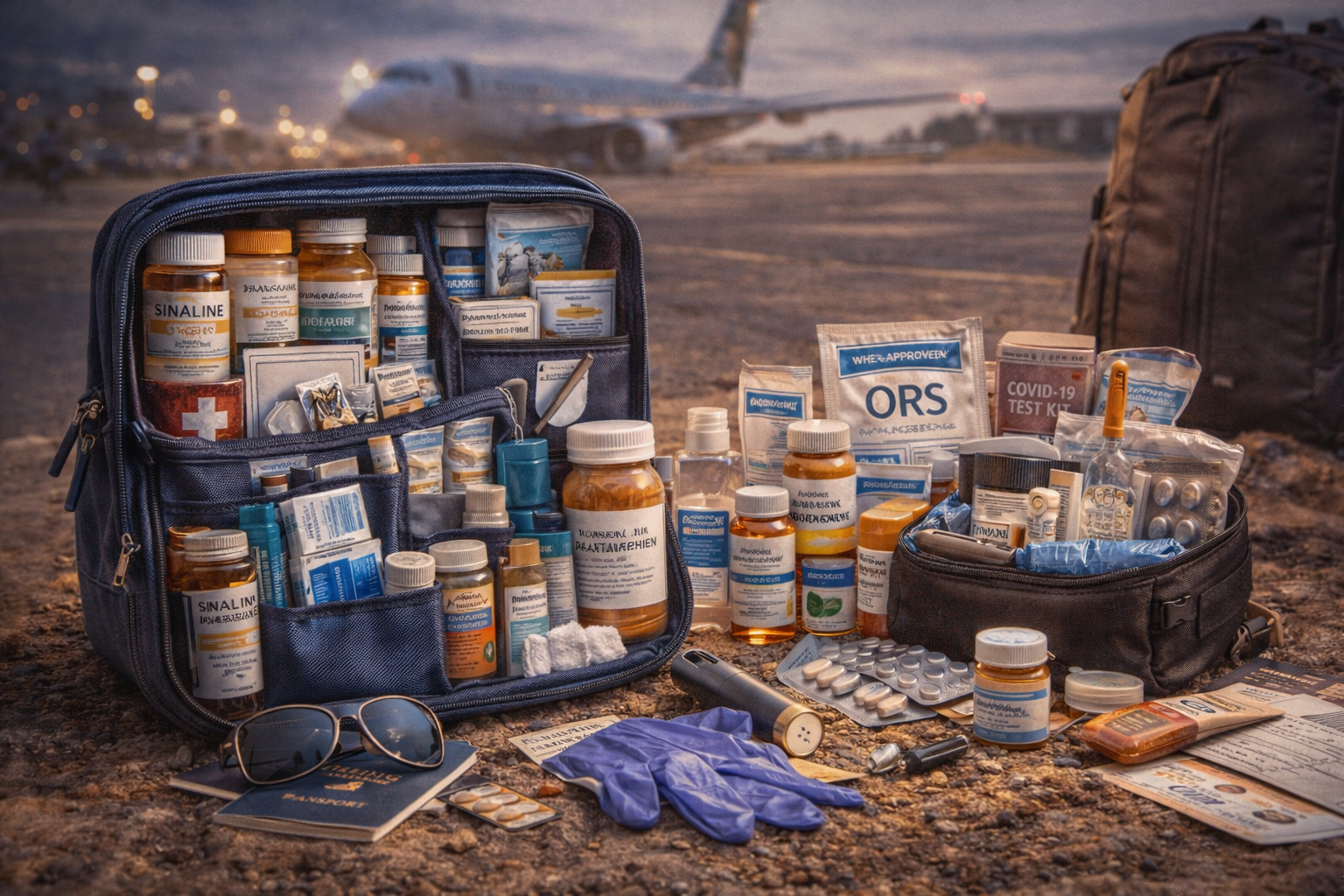
The most important items in a travel survival kit are your personal prescription medications. Always carry them in original containers, never in checked luggage. Include enough for the entire trip plus extra days for delays. Keep printed copies of prescriptions and a medication list that includes dosages, prescribing doctors, and allergies.
If losing access to a pharmacy would cause harm, it belongs in your carry-on.
Core Medications Every Traveler Should Carry
Pain and fever reducers help manage illness, inflammation, or injury when medical care is delayed. Anti-diarrheal medication is critical, especially when traveling to places with unfamiliar food or water. Antihistamines help with allergic reactions, insect bites, or unexpected environmental exposure. Motion sickness or anti-nausea medication can be essential during flights, boats, or long drives. A mild sleep aid recommended by a doctor may help during jet lag or emergency rest situations.
Hydration Is Survival on the Road
Dehydration is one of the fastest ways travel stress turns dangerous. Pack oral rehydration salts (ORS). They weigh almost nothing and can save you from severe weakness caused by diarrhea, vomiting, fever, or heat exposure. Add water purification tablets for destinations where water safety is uncertain or during unexpected outages.
Clean water and electrolytes matter more than food in the first 48 hours of trouble.
First Aid and Body Protection
A compact first aid set should include adhesive bandages, blister treatment, antiseptic wipes, antibiotic ointment, burn gel, and disposable gloves. Add sunscreen, lip balm, and insect repellent, especially for warm or tropical destinations. A digital thermometer helps you decide whether a fever is manageable or needs attention.
Travel-Specific Essentials People Forget
Electrolyte imbalance, digestive issues, and minor infections are far more common than dramatic injuries. Include probiotics if recommended by your doctor, antacids, and stool softeners. Pack spare contact lenses or glasses if needed. Include a small flashlight or headlamp for outages, and a few face masks for crowded transport or illness.
Children and Seniors Need Special Planning
If traveling with children, include weight-based medications in liquid form, dosing syringes, and written dosing charts. For elderly travelers, prioritize medication continuity, glucose monitoring supplies if diabetic, mobility aids, and clear written instructions.
One-size-fits-all kits fail families. Customization is safety.
What Should Never Be in a Travel Survival Kit
Do not include homemade pills, unlabeled medications, or herbal substitutes meant to replace real medicine. Do not rely on buying essentials at your destination. Pharmacies may be closed, restricted, or unfamiliar with your needs.
Improvisation is the enemy of safety when traveling.
Storage and Access Matter
Use a small, waterproof pouch. Organize by category so you can find what you need under stress. Keep the kit accessible at all times. In emergencies, digging through luggage wastes energy and time.
Final Thought
A travel survival kit is not about fear. It is about independence. It allows you to manage health problems quietly, confidently, and early before they become crises.
You may never need it. That is the point.
But if something goes wrong, it can turn a ruined trip into a manageable story instead of a medical emergency.