

We like to think the world has fixed borders.
Rivers belong in their channels. Lakes stay in their basins. The sea stops neatly at the shore.
But water does not care about the lines on our maps.
When it decides to move, it moves.
In a single night or over slow, merciless days, water can rise over streets, fields, and cities, turning the familiar into a drowned memory. That is a flood: when water forgets its place and takes ours instead.
What is a flood, really?
A flood happens when water overflows onto land that is usually dry. It can come from many directions and for many reasons:
– Heavy rain that the ground or drainage systems can’t absorb
– Rivers that swell beyond their banks
– Dams or levees that break or are overtopped
– Storm surges from the sea during hurricanes or cyclones
– Rapid snowmelt in mountains
– Even ice jams or blocked channels that suddenly give way
Of all natural disasters on Earth, floods are among the most common. They happen in rich countries and poor ones, in cities and in remote villages, in the tropics and in the high latitudes. Wherever there is water, there is the potential for a flood.
Different faces of the same rising threat
Not all floods look the same. Some sneak in slowly. Others arrive like a thief with a hammer.
-
River floods – when the banks can no longer hold
After days or weeks of heavy rain, rivers can swell quietly but steadily.
At first they just seem high. Then they begin to spill over the banks, filling nearby fields, then roads, then homes and businesses in low-lying areas.
These floods may be slower, but they can cover huge regions and last for days or even weeks. -
Flash floods – when the sky empties too fast
Flash floods are sudden and violent.
They often happen when intense rain falls in a short time, especially over hard, dry, or urban surfaces that don’t absorb water well.
Water rushes into gullies, creeks, and streets, creating torrents that can:
– Sweep away cars
– Knock people off their feet
– Tear out small bridges and roads
They may last only minutes or hours, but in that time they can be deadly. -
Coastal floods and storm surges – when the sea climbs the land
During powerful storms like hurricanes or cyclones, strong winds push seawater toward the shore, creating a storm surge—a raised dome of water that moves inland.
Combined with high tide, these surges can flood coastal cities, ports, and villages, even if it isn’t raining much locally. -
Dam or levee failure – when the barrier breaks
Dams and levees are built to control water, but if they fail or are overtopped, the released water can create sudden, catastrophic flooding downstream.
Entire communities can be inundated in minutes, with little time to escape. -
Urban floods – when cities drown in their own design
In cities, concrete and asphalt cover the soil. Rain that would normally soak into the ground has nowhere to go.
If drainage systems are overwhelmed or clogged, water backs up into streets, basements, and homes.
Even moderate rainfall can cause serious urban flooding in poorly planned or aging cities.
The weight of water
Water doesn’t look dangerous at first glance. We drink it, bathe in it, float on it. But in a flood, water reveals its true strength.
– Just 15–30 cm (6–12 inches) of fast-moving water can knock an adult off their feet.
– Around 60 cm (2 feet) of water can float and sweep away many cars.
– The force of moving water can undercut roads, strip away soil, and collapse structures.
Beyond the immediate impact, floods can:
– Contaminate drinking water with sewage, chemicals, and debris
– Destroy crops and erode fertile topsoil
– Damage or destroy bridges, roads, and power infrastructure
– Spread disease in the aftermath, especially where sanitation is poor
When the water goes, it doesn’t take the consequences with it. Mud, mold, and broken lives remain.
Slow disaster, fast disaster
One of the cruel things about floods is that they can be both predictable and surprising.
– A river flood upstream may be tracked for days—people know it’s coming, even if they can’t stop it. They pile sandbags, move belongings, and pray the water stops just short.
– A flash flood, on the other hand, may begin with a single intense storm. A dry ravine turns into a deadly torrent in minutes. People in low spots or cars under bridges may have no idea danger is approaching until it’s too late.
Both kinds of floods teach the same lesson: water doesn’t negotiate. If it wants the space, it takes it.
Why floods are getting harder to ignore
Floods have always happened. They’re part of the natural cycle of rivers and coasts. Floodplains, in particular, are meant to flood—they are nature’s pressure valves.
But our modern world has changed the rules:
– We build homes, factories, and entire cities on floodplains because the land is flat and fertile.
– We pave over fields, wetlands, and forests that used to soak up rain like sponges.
– We straighten rivers, confine them with levees, and ignore their need to spread out during heavy flows.
On top of that, a warming climate is influencing floods in many regions:
– Warmer air holds more moisture, which can mean heavier rainfall events.
– Rising sea levels make coastal flooding and storm surges more dangerous.
– Shifting snowmelt patterns can change the timing and intensity of river floods.
As a result, what once was “a rare, once-in-a-century flood” is increasingly showing up more often in some places.
Water as memory and trauma
Floods don’t just wash away things; they wash away certainty.
For people who have lived through major flooding, memories remain vivid:
– Waking up to sirens and the sound of water against the door
– Watching furniture float in their own living room
– Waiting on rooftops or upper floors for rescue boats
– Returning to a home that smells of mud, mold, and loss
Photographs ruined. Documents destroyed. Family heirlooms gone.
The grief is not only for the house, but for the pieces of life that can never be fully replaced.
And yet, alongside trauma, floods also reveal something else: resilience.
– Neighbors rescuing neighbors in small boats
– Volunteers filling sandbags through the night
– Strangers arriving with food, blankets, and cleaning supplies
– Communities fighting, together, to reclaim what the water took
Can we live with water instead of against it?
The hard truth: we can’t stop rain from falling or rivers from rising. We cannot command the sea to stay at its line.
But we can change how we live with water:
– Restoring wetlands and natural floodplains that absorb excess water
– Avoiding building in the most vulnerable low-lying areas, or elevating structures
– Designing cities with better drainage, green spaces, and permeable surfaces
– Strengthening dams and levees where truly needed—but not relying on them alone
– Using early-warning systems, river gauges, and rainfall forecasts to evacuate in time
Some countries are embracing the idea of “making room for the river” or “living with water” instead of trying to force it into rigid, narrow channels. This means planning cities and landscapes where water has safe places to go when it overflows.
On the personal level, preparation matters too:
– Knowing if your home is in a flood-prone area
– Understanding local evacuation routes
– Keeping important documents in waterproof containers
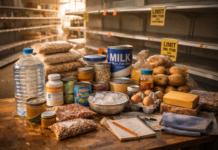
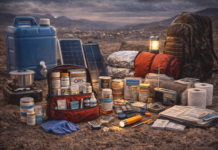
– Having a small emergency kit ready—medications, food, water, a flashlight, chargers
Floods are more survivable when they are not treated as surprise guests.
The line that moves
Every flood draws a temporary new map:
– Streets that become rivers
– Fields that become lakes
– Walls that become shorelines
Then the water goes, and we redraw the maps again, pretending the lines are permanent.
But somewhere beneath that fresh coat of normalcy, we know the truth: the line between wet and dry, between safety and danger, can move.
Floods are the Earth’s way of reminding us that water always has the last word.
Our task is not to silence it—but to listen, to learn, and to build lives and cities that can endure the days when the water forgets its place and comes looking for our own.
Photo by Chris Gallagher on Unsplash