

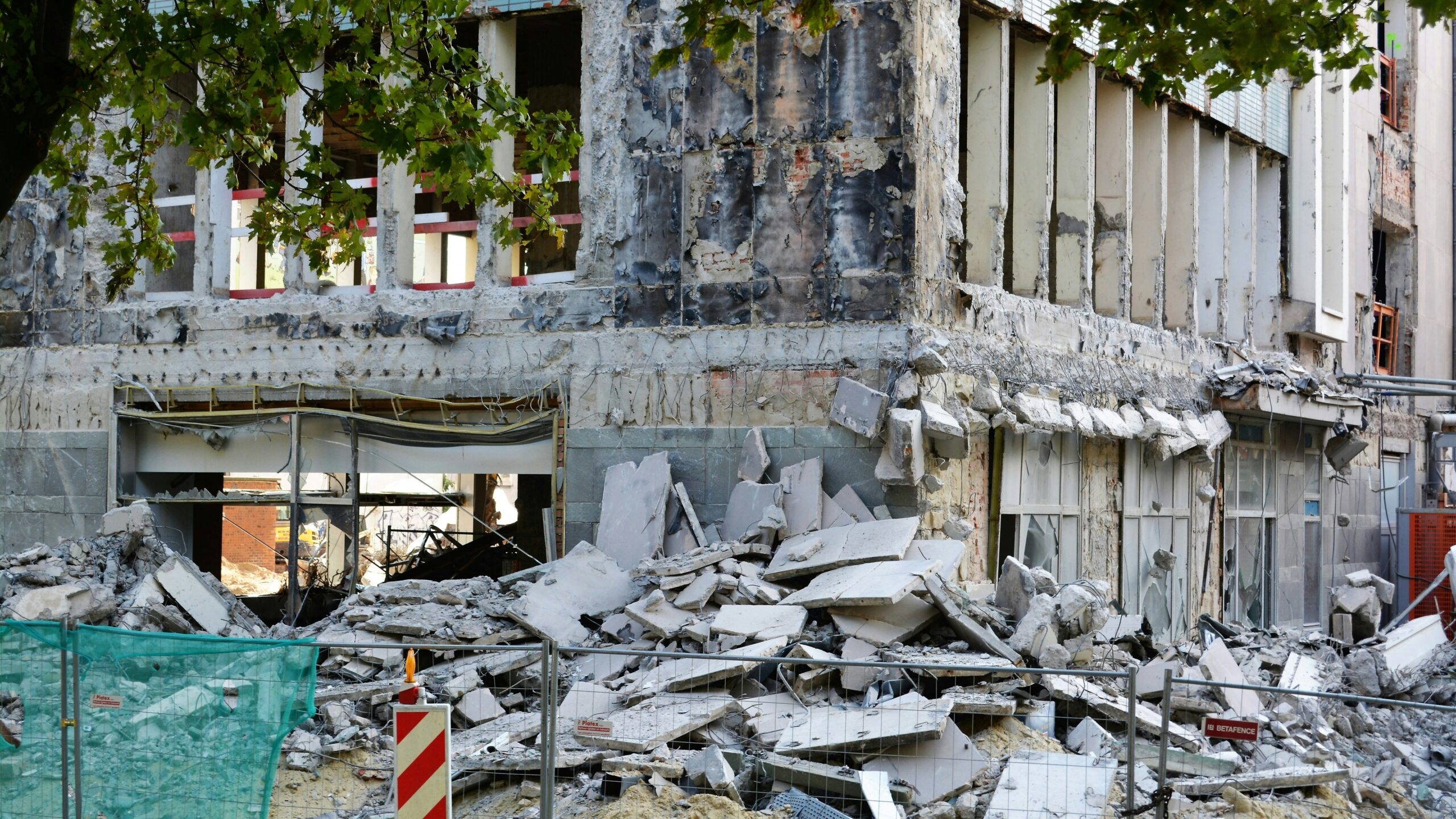
We walk on the Earth as if it were solid, stable, trustworthy.
We build our homes, our cities, our memories on it.
But sometimes, without warning, the ground itself becomes the danger. It ripples like water, cracks like glass, and in a few terrifying seconds, everything we thought was permanent can change.
That is the reality of an earthquake.
What is an earthquake, really?
Beneath our feet, the outer shell of the Earth is not one unbroken piece. It is made of gigantic slabs of rock called tectonic plates. These plates float slowly on top of the hotter, softer layer beneath, moving just a few centimeters a year—about as fast as your fingernails grow.
They can:
– Slide past each other
– Collide and crumple
– Pull apart and stretch the crust
But the edges of these plates do not slide smoothly. They get stuck. Friction locks them in place while the deeper forces of the Earth keep pushing. Pressure builds silently over years, decades, even centuries.
Then, suddenly, something gives.
The rock snaps, the plates lurch, and energy is released in waves that travel through the Earth.
That is an earthquake: the sudden shaking of the ground when tectonic plates move and the Earth’s crust breaks under stress.
The waves you can’t see, and the shaking you can’t ignore
Earthquakes release energy in the form of seismic waves. There are different types, but two groups are important for what we feel:
– P-waves (primary waves): The fastest, arriving first. They compress and expand the ground, like a slinky stretching and squashing.
– S-waves (secondary waves): Slower, but more destructive, shaking the ground side to side and up and down.
Then come surface waves, which travel along the Earth’s exterior and can cause the dramatic rolling and swaying that topples buildings.
To a person standing on the ground, all these invisible waves translate into one terrifying sensation: the solid Earth suddenly moves like a living thing.
Why some earthquakes are so destructive
Not all earthquakes are equal. Many are tiny; millions happen every year, and most are too small for humans to feel. Others are powerful enough to be recorded on seismographs halfway around the world.
The damage from an earthquake depends on several factors:
-
Magnitude
This is a measure of how much energy the earthquake releases. The scale is logarithmic: each whole number increase means about 32 times more energy.
A magnitude 7 quake releases vastly more energy than a magnitude 6. -
Depth
Shallow earthquakes (closer to the surface) usually cause more damage than deep ones, because their energy has less rock to travel through before reaching cities and towns. -
Distance from the epicenter
The closer you are to the point on the surface above where the quake began, the stronger the shaking you feel. -
Local ground conditions
Soft sediments can amplify shaking, making it worse. In some places, the shaking can even cause the ground to behave like a liquid—this is called liquefaction, and it can make buildings tilt or sink. -
Building strength
Earthquakes do not kill on their own. It is collapsing buildings, falling debris, fires, and broken infrastructure that turn shaking into tragedy.
In regions with strict building codes and earthquake-resistant design, the same magnitude can cause far fewer deaths than in places where structures are weak or poorly built.
More than shaking: landslides, fires, and tsunamis
Earthquakes are not just about the ground trembling. They can unlock other dangers:
Landslides
In mountainous or hilly areas, the shaking can weaken slopes, sending earth and rock rushing downhill. These landslides can bury roads, villages, and anything in their path.
Fires and broken infrastructure
Gas lines can break. Power lines can fall. Roads can crack. Water pipes and hospitals can be damaged at the exact moment people need them most.
In cities, a large earthquake can be followed by multiple smaller disasters: fires, flooding from broken dams, blocked emergency routes.
Tsunamis
When an earthquake occurs under the ocean or along a coastal fault, it can push or pull huge amounts of water. This sudden movement of the sea floor displaces the water above it and sends waves racing across the ocean.
These are tsunamis: long, powerful waves that are barely noticeable in deep water but rise dramatically as they approach shallow coasts.
The 2004 Indian Ocean earthquake and tsunami and the 2011 Tōhoku earthquake in Japan are grim reminders of how one powerful quake under the sea can trigger a disaster that spreads across oceans and continents.
Can we predict earthquakes?
This is one of the most painful truths: we cannot yet predict the exact time and place of an earthquake.
Scientists can:
– Identify fault lines and regions where earthquakes are more likely
– Estimate the long-term probability of certain magnitudes occurring
– Monitor slow changes in stress and microquakes in certain areas
But they cannot say: “Tomorrow at 3:42 p.m., a magnitude 7.1 will occur here.” The Earth is far too complex, and the signals are not clear enough.
Instead of prediction, the focus is on preparation.
How humanity fights back: preparedness and design
We cannot stop tectonic plates from moving, but we can stop buildings from collapsing so easily. We can design our societies to bend, not break.
Some of the most effective protections include:
– Strong building codes in earthquake-prone regions
– Flexible structures that sway instead of shatter
– Special foundations that absorb or reduce shaking
– Securing heavy furniture and objects inside homes
– Educating the public about what to do before, during, and after a quake
Simple actions save lives:
– “Drop, cover, and hold on” during a quake
– Knowing safe spots away from windows, shelves, and falling objects
– Having emergency kits with water, food, and medical supplies
Countries like Japan and Chile, which live with frequent earthquakes, show that with planning, engineering, and education, modern societies can survive powerful quakes with far fewer casualties.
The emotional aftershocks
Beyond the physics and engineering, earthquakes leave deep marks on human hearts. There is a unique kind of fear in realizing that the ground itself is not guaranteed to be stable. For many survivors, the psychological aftershocks—anxiety, insomnia, sudden fear at minor vibrations—can last long after the rubble is cleared.
Yet, in the aftermath, something else also appears:
– Communities come together
– Strangers help strangers
– People rebuild with new knowledge and stronger structures
In this way, earthquakes reveal both our vulnerability and our resilience.
Living on a restless planet
Earthquakes are not accidents. They are part of the way our planet works. Plate tectonics helps build mountains, recycle the crust, and shape continents. Without this restless activity, Earth might not be the dynamic world that allows life to evolve and thrive.
But the same forces that give us mountains and fertile valleys also bring risk. Living on Earth means living with earthquakes, whether they are gentle, unfelt tremors or powerful shocks that change the course of history.
In the end, earthquakes remind us of a simple truth:
Stability is an illusion.
The ground itself can move, without warning.
Our challenge is not to stop the Earth from being what it is, but to use our intelligence, technology, and compassion to live wisely on a planet that is always in motion.
Photo by Carl Campbell on Unsplash