

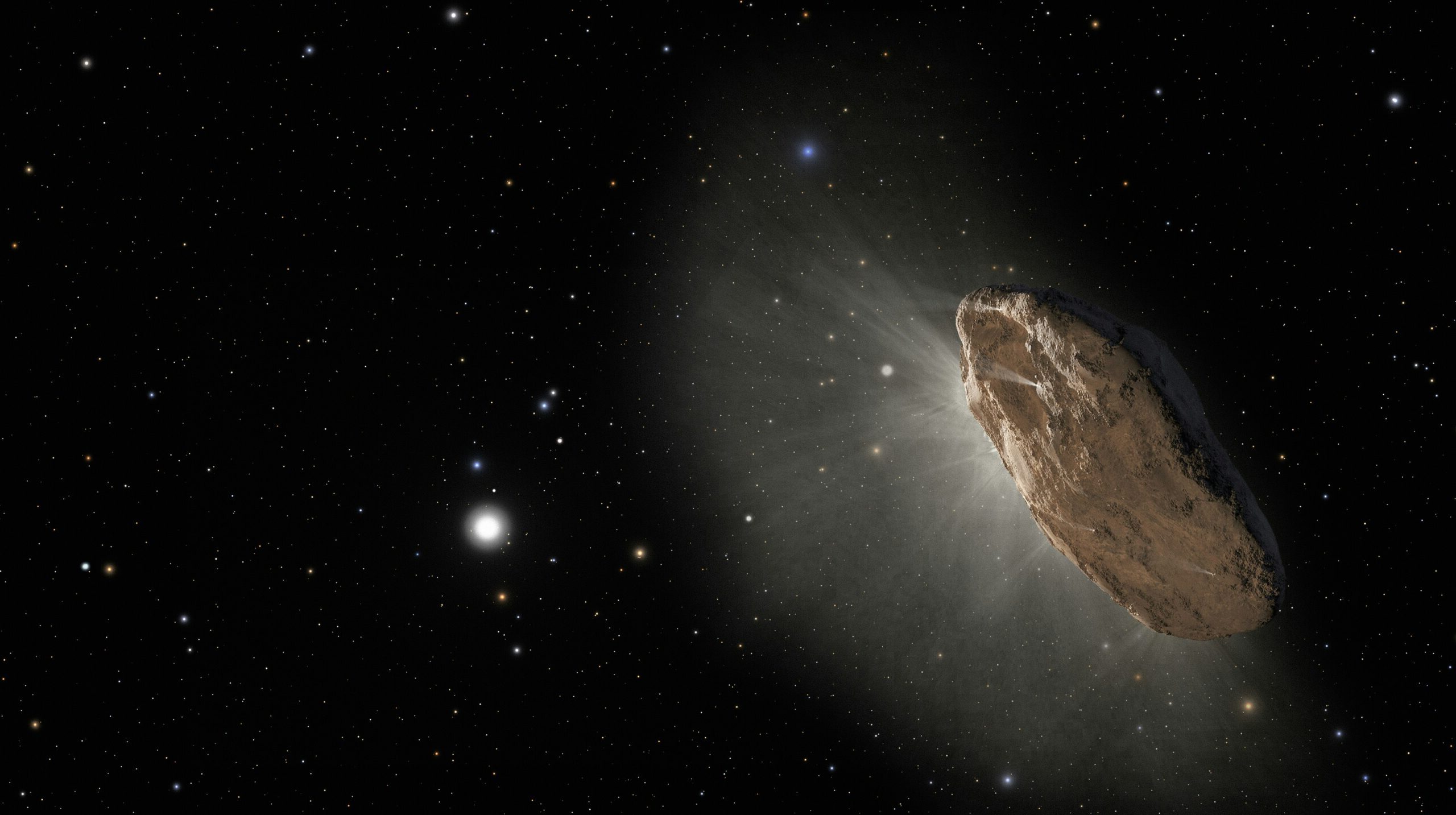
High above our heads, space looks calm and silent. But racing through that darkness are countless rocks and icy bodies—asteroids and comets—left over from the birth of our solar system. Most of them never come close to us. Some burn up as harmless shooting stars.
But every once in a very long while, a big one hits.
A large asteroid or comet impact is one of the most dramatic natural disasters our planet can experience—a force of nature that comes not from Earth, but from the sky itself.
What exactly is an asteroid or comet?
Asteroids and comets are both “space rocks,” but they’re a bit different in nature and behavior.
• Asteroids
– Made mostly of rock and metal
– Mostly live in the asteroid belt between Mars and Jupiter
– Some, called near-Earth objects (NEOs), cross Earth’s orbit and occasionally come close
• Comets
– Made of ice, dust, and rock
– Come from much farther away, in the colder regions of the solar system
– When they approach the Sun, their ice turns to gas and creates a glowing tail
Most are tiny on a planetary scale. But a small percentage are big enough to cause serious damage if they collide with Earth.
When a giant rock hits: what actually happens?
Imagine a mountain-sized rock traveling tens of thousands of kilometers per hour. When it hits Earth, the energy released is equivalent to millions or billions of nuclear bombs. The exact effects depend on its size, speed, angle, and where it lands—land or ocean.
-
Shockwave and fireball
– The impact releases an enormous blast of heat and pressure.
– Near the impact site, everything can be instantly vaporized or set on fire.
– A powerful shockwave travels outward, flattening forests, cities, and anything standing. -
Global fires
– The heat of the impact and red-hot debris raining down from the sky can ignite massive wildfires over large areas.
– Smoke from these fires adds to the dust and ash in the atmosphere. -
Tsunamis (if it hits the ocean)
– Since most of Earth is covered by water, there’s a high chance a large asteroid would land in the sea.
– The impact could push out gigantic waves—megatunami-scale in extreme cases.
– These waves could travel across entire ocean basins, flooding coastlines thousands of kilometers away. -
Dust clouds and “impact winter”
One of the most dangerous long-term effects is not the initial blast, but what happens after.– The impact ejects dust, rock, and vapor high into the atmosphere.
– Tiny particles can spread around the globe and block part of the sunlight.
– If the impact is big enough, this can lead to an “impact winter”:
· Cooler global temperatures
· Darker skies
· Shorter growing seasons for cropsPlants struggle, food chains are disrupted, and ecosystems come under serious stress.
A disaster written in stone: the dinosaurs’ warning
We don’t have to imagine all of this only with theory—Earth has a famous example:
About 66 million years ago, a large asteroid, roughly 10–12 km wide, struck near what is now the Yucatán Peninsula in Mexico. It created the Chicxulub crater and is strongly linked to the mass extinction that wiped out most dinosaurs (and many other species).
That impact:
– Released unimaginable energy
– Triggered fires, tsunamis, and a long period of cooling
– Transformed Earth’s ecosystems and opened the door for mammals—and eventually humans—to thrive
So yes, a large asteroid or comet impact can literally rewrite the story of life on Earth.
How often do big impacts happen?
Here’s the reassuring part: truly large impacts are extremely rare.
– Tiny meteoroids hit the atmosphere every day and burn up as shooting stars.
– Larger objects (a few meters across) sometimes explode high in the air, causing bright fireballs and sonic booms, but usually don’t reach the ground.
– City-destroying or region-destroying impacts (tens to hundreds of meters wide) happen on timescales of thousands to tens of thousands of years.
– Global-scale impacts like the dinosaur-killer are on the scale of many millions of years.
In other words: such an event can happen again one day, but it is very unlikely in any given human lifetime.
Who’s watching the sky?
Unlike earthquakes or supervolcanoes, asteroid and comet impacts come with a unique advantage: we can actually see many of the potential threats long before they get near us.
Space agencies and observatories around the world are constantly scanning the skies for near-Earth objects (NEOs). They:
– Track their orbits
– Calculate how close they will come to Earth
– Estimate their size and potential impact energy
If an object is discovered that might one day cross Earth’s orbit at the wrong time, scientists can refine its trajectory and predict the risk.
From watching to deflecting: planetary defense
The next step after tracking is… defense. If we find a dangerous object early enough—years or decades before impact—there are possible ways to gently change its orbit so it misses Earth.
Ideas include:
– Hitting it with a spacecraft to nudge it slightly (a “kinetic impactor”)
– Using a spacecraft’s gravity as a “tug” over long periods
– In the far future, more advanced methods might be developed
The key is time. A tiny change in the orbit, if done early, can become a huge difference by the time the asteroid would have reached Earth.
Living under the cosmic sky
It can feel unsettling to think that giant rocks sometimes wander across our orbit. But it’s also part of the natural environment of our planet, just like earthquakes, storms, and volcanoes—except this one comes from space.
The difference today is:
– We have telescopes, satellites, and computers that can see and track many of these objects.
– We have growing international cooperation focused on planetary defense.
– We are no longer completely blind to what is happening in the sky.
Should we panic? No.
Should we respect the possibility and support the science that watches the heavens? Absolutely.
In the end, large asteroid and comet impacts remind us of two truths at the same time:
– We live on a vulnerable, beautiful planet orbiting a star in a dynamic universe.
– And we are a species that can look up, understand the danger, and work together to protect our fragile home.
Photo by NASA Hubble Space Telescope on Unsplash