
The deepest parts of the ocean remain one of Earth’s last true frontiers. Sunlight disappears within a few hundred meters, pressure becomes crushing, and temperatures swing between freezing darkness and superheated vents. For centuries, humans assumed almost nothing could survive there.
They were wrong.
Recent deep-sea explorations have revealed a world so strange and alive that it forces scientists to rethink what life needs to exist at all.
Life where life was never supposed to be
One of the most astonishing discoveries comes from hydrothermal vents, fissures in the seafloor that release mineral-rich, superheated water. These environments are toxic, dark, and extreme by any surface standard.
Yet they are bursting with life.
Entire ecosystems thrive around these vents without sunlight. Giant tube worms, blind shrimp, unusual crabs, and microbes survive by using chemical energy instead of photosynthesis. This process, known as chemosynthesis, rewrote biology textbooks.
Life, it turns out, does not need the sun. It needs opportunity.
Creatures that feel almost alien
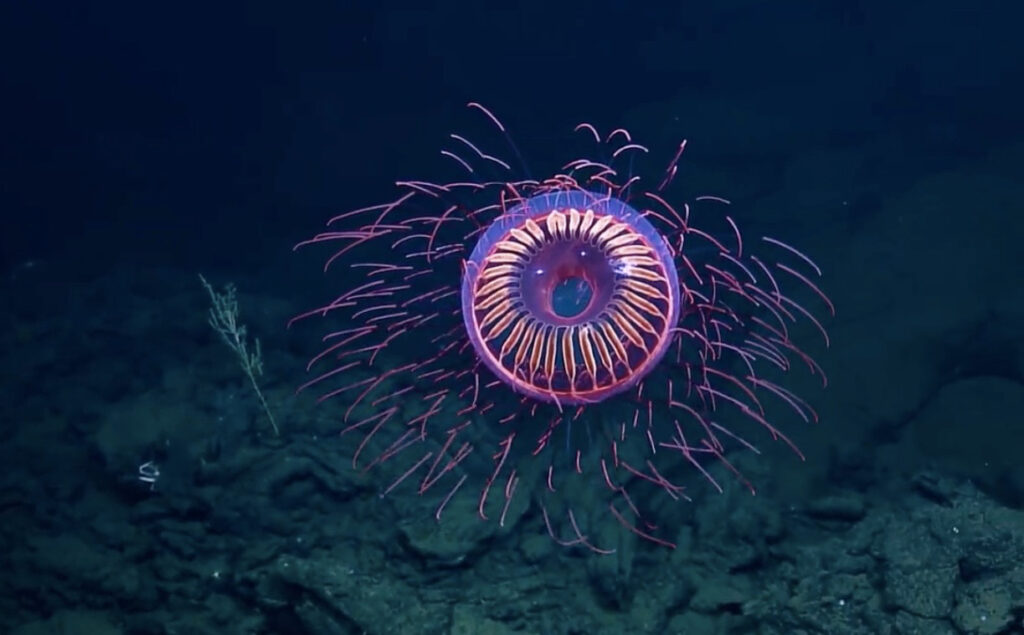
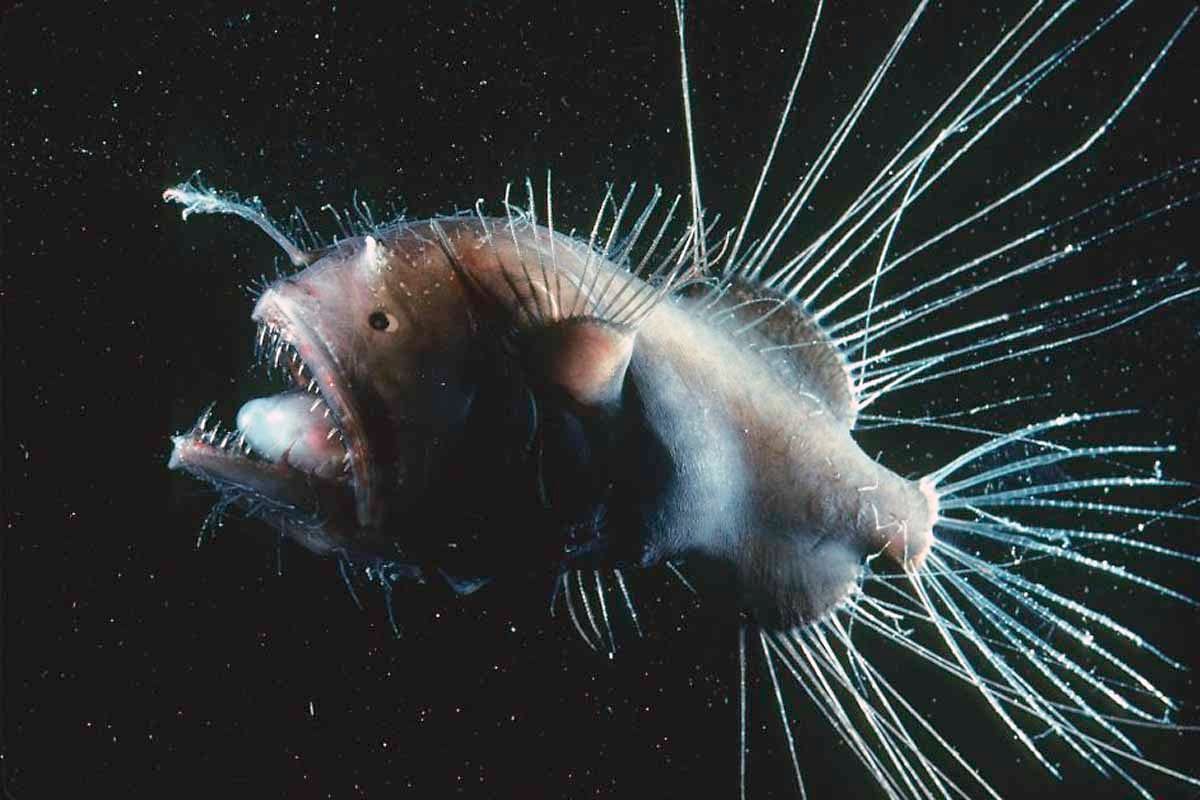
Deep-sea expeditions continue to uncover species that seem to belong more to science fiction than Earth.
Transparent animals with visible organs. Fish with bioluminescent organs glowing like living lanterns. Creatures that swallow prey larger than themselves. Others that can survive pressures that would instantly crush a submarine hull.
Many of these species have never been seen before. Some may exist only in narrow zones of the seafloor, isolated for millions of years.
Every descent brings the possibility of discovering something entirely new.
The hidden role of the ocean floor
Beyond life forms, scientists are uncovering how active and influential the ocean floor truly is.
Underwater volcanoes reshape the planet continuously. Tectonic plates spread and collide beneath the sea, creating earthquakes, mountains, and trenches far larger than anything on land. Massive underwater landslides can trigger tsunamis.
The seafloor is not static. It is dynamic, powerful, and deeply connected to surface life.
Microbes that could change science
Some of the smallest discoveries may be the most important.
Microorganisms found deep beneath the ocean floor survive without oxygen, sunlight, or organic matter from above. They metabolize minerals and gases, living at the edge of what science once considered possible.
These microbes are now studied for their potential applications in medicine, energy, and climate science. They also reshape how scientists think about life beyond Earth.
If life can thrive here, where else might it exist?
Clues about Earth’s past and future
Sediments at the bottom of the ocean act like a planetary archive. Layer by layer, they record climate shifts, mass extinctions, volcanic events, and changes in ocean chemistry over millions of years.
By drilling deep into the seabed, scientists can reconstruct Earth’s history with remarkable precision. This information helps predict future climate behavior and ocean health.
The deepest parts of the ocean are not just mysterious. They are essential to understanding our planet.
Why we’re only beginning to understand it
Despite these discoveries, humans have explored more of the Moon’s surface than the deep ocean. Extreme conditions, high costs, and technical limits slow progress.
Each expedition captures only brief glimpses of a vast unknown.
What lies deeper, farther, or hidden beneath layers of sediment remains largely unanswered.
A reminder of how little we know
The bottom of the ocean challenges one of humanity’s most comfortable assumptions: that we understand our own planet.
Every discovery down there reminds us that Earth is still full of secrets. Strange life forms. Unfamiliar ecosystems. Processes that shape the world quietly, out of sight.
The most unbelievable part is not what scientists have found.
It’s how much remains undiscovered, waiting in the dark, beneath miles of water, rewriting everything we thought we knew.