

For decades, the business world told a single story. Growth meant scale. Scale meant extraction. And environmental harm was framed as the unavoidable cost of success.
That story is quietly breaking apart.
Across industries, a different model is proving itself. Companies are thriving not by getting bigger, louder, or faster, but by getting smarter. They design less waste into their systems, build loyalty instead of volume, and treat efficiency as innovation rather than limitation.
These businesses are not always the most visible. But they are increasingly the most resilient.
Designing smarter instead of expanding endlessly
The most successful eco-friendly companies share a common trait: restraint.
Rather than chasing infinite growth, they optimize what already exists. They reduce material use, streamline logistics, and eliminate unnecessary steps. Profit emerges not from excess production, but from precision.
Smarter design lowers costs. Less waste means fewer inputs. Fewer inputs mean stronger margins. Sustainability becomes a financial advantage, not a burden.
In these businesses, efficiency is not about cutting corners. It is about cutting nonsense.
Circular thinking, linear results
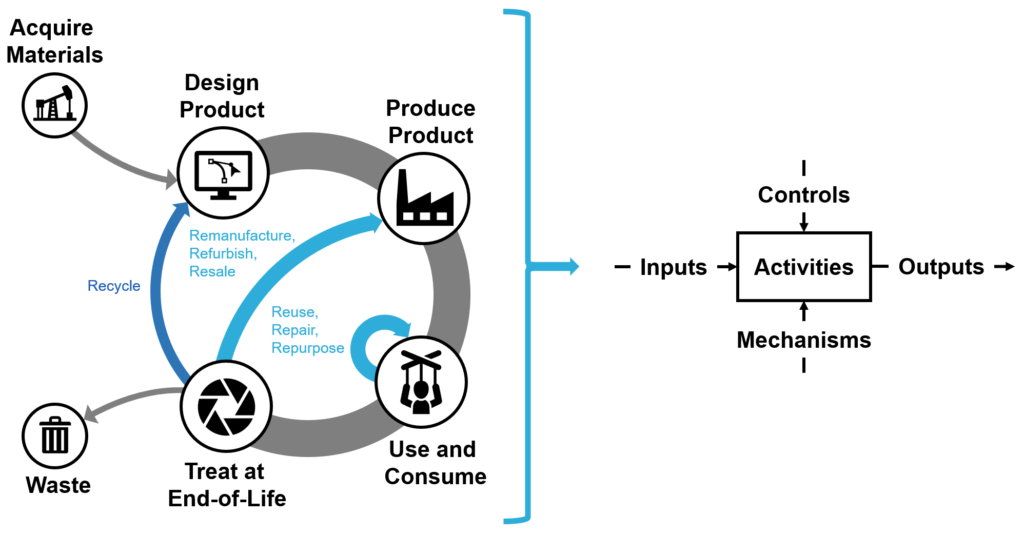
Traditional business models follow a straight line. Extract, produce, sell, discard. Eco-friendly companies bend that line into a circle.
They design products that can be repaired, reused, returned, or recycled. They reclaim materials and reintroduce them into production. They treat waste as a design failure rather than an externality.
This circular approach reduces dependence on volatile supply chains and rising resource costs. It also builds long-term customer trust.
When a company takes responsibility for what happens after the sale, it earns loyalty that advertising cannot buy.
Quiet case studies, powerful outcomes
Some of the strongest examples come from brands that rarely market their sustainability at all.
Manufacturers that reduced packaging simply because it was inefficient. Apparel companies that shifted to fewer, better styles and saw return rates drop. Food businesses that sourced locally to stabilize supply rather than to signal virtue.
These decisions were not driven by trends. They were driven by logic.
The environmental benefit followed the business benefit.
Culture as infrastructure
Eco-friendly businesses also invest differently in people.
Workplace cultures that prioritize well-being, flexibility, and purpose experience lower turnover and higher engagement. When employees believe in what they are building, productivity rises naturally.
Sustainability here is not a policy. It is a mindset that influences how teams collaborate, how decisions are made, and how long-term thinking is valued over short-term wins.
Healthy systems produce healthy outcomes.
Customers reward intelligence
Modern consumers are increasingly skeptical of loud claims. They are drawn instead to brands that feel consistent, honest, and grounded.
Companies that quietly do the right thing often discover that customers notice anyway. Transparency builds credibility. Consistency builds trust. Trust builds profit.
Eco-friendly businesses win not because they advertise ethics, but because they embody them.
Technology as an enabler, not a crutch
Smart businesses use technology to reduce impact rather than amplify consumption.
Data helps optimize energy use. Automation minimizes waste. Digital tools replace physical excess. Innovation is applied to precision rather than scale.
Technology becomes a support system, not a distraction.
This shift reflects a deeper maturity. Innovation is no longer about doing more. It is about doing better.
Rethinking success itself
Perhaps the most radical aspect of these businesses is how they define success.
They measure performance not only by revenue, but by resilience. Not only by growth, but by stability. Not only by market share, but by longevity.
Eco-friendly businesses that are quietly winning are not trying to dominate. They are trying to endure.
And endurance, in a volatile world, is the most valuable asset of all.
The future of profit
As environmental limits tighten and consumer expectations evolve, the businesses best positioned for the future will not be those that exploit the most resources. They will be those that understand them.
Profit without environmental harm is not a fantasy. It is already happening, quietly, thoughtfully, and effectively.
The companies leading this shift may never shout about it.
They won’t need to.