
For centuries, the Hittite Empire stood as one of the great powers of the ancient world. From their stronghold in Anatolia, they rivaled Egypt, challenged Mesopotamia, and controlled vital trade routes linking East and West. They forged advanced laws, mastered iron technology earlier than most, and negotiated one of history’s first recorded peace treaties.
And then, astonishingly, they disappeared.
Not slowly.
Not gracefully.
But with a suddenness that shocked the ancient world itself.
A Power Equal to Egypt
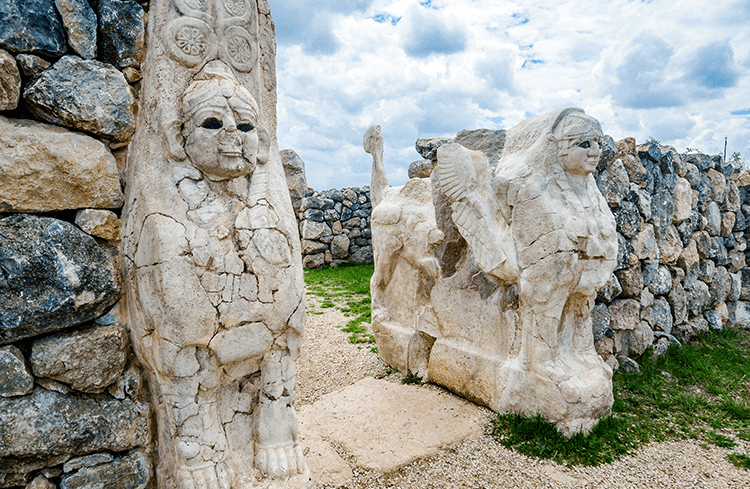
At their height around the 14th–13th centuries BCE, the Hittites ruled a vast empire stretching across modern-day Turkey and into Syria. Their capital, Hattusa, was a fortified city of monumental gates, archives, and temples carved into stone.
They were powerful enough to confront Egypt directly. The famous Battle of Kadesh, fought against Pharaoh Ramses II around 1274 BCE, ended not in conquest but in compromise. The result was the earliest known written peace treaty in history.
This was not a fragile civilization.
It was a superpower.
Masters of Law, Diplomacy, and Iron
The Hittites were unusually sophisticated administrators. Their legal codes emphasized restitution over brutal punishment. Their diplomacy relied on treaties, marriage alliances, and correspondence rather than constant war.
They were also early adopters of ironworking, giving them a technological edge during the late Bronze Age.
By every measure, they were prepared to endure.
Then the World Began to Fracture
Around 1200 BCE, the eastern Mediterranean entered a period of widespread chaos now known as the Late Bronze Age Collapse. Empires fell across the region almost simultaneously.
Trade networks broke down.
Cities burned.
Famine spread.
The Hittites stood at the center of this storm.
Enemies Without Names
Ancient texts speak of mysterious invaders often referred to as the “Sea Peoples.” Their exact identity remains unknown. They appear suddenly, attack coastal and inland cities, and vanish from records just as quickly.
Hittite territories were struck from multiple directions.
Defense became impossible.
Internal Weakness Beneath Imperial Strength
The Hittite Empire relied heavily on long-distance trade for bronze production, food supply, and political stability. When trade collapsed, shortages followed. Grain deliveries failed. Provincial governors rebelled.
An empire designed for connectivity became vulnerable when connections snapped.
The Capital Falls Silent
Hattusa was abandoned and burned. Royal archives stop abruptly. No records describe a heroic last stand or final ruler. The administrative system simply ceases.
This is what makes the Hittite collapse so unsettling.
There is no ending.
Only absence.
Not Conquered, But Erased
Unlike civilizations absorbed by successors, the Hittites left no clear heirs. Their language faded. Their political identity dissolved. Within decades, their name vanished from history.
For centuries, they were forgotten entirely.
It wasn’t until the 19th century that archaeologists rediscovered their ruins and decoded their tablets.
A superpower lost twice: once in reality, once in memory.
Why the Collapse Felt Overnight
In historical terms, the fall may have taken years. But in cultural memory, it was instantaneous. One generation ruled an empire. The next lived among ruins.
No recovery followed.
No revival emerged.
What the Hittites Teach Us
The Hittite collapse reveals how complex systems fail. Strength in one era becomes fragility in another. Interdependence creates efficiency, but also systemic risk.
When multiple pressures align, even the strongest structures can vanish rapidly.
The Final Reflection
The Hittite Empire did not fall because it was weak. It fell because it was deeply integrated into a world that collapsed around it. When trade failed, climate shifted, enemies surged, and internal stability cracked, there was no margin left.
One of the ancient world’s greatest powers disappeared so completely that history forgot it existed.
Their story reminds us that collapse doesn’t always come with warning.
Sometimes, it comes overnight.