

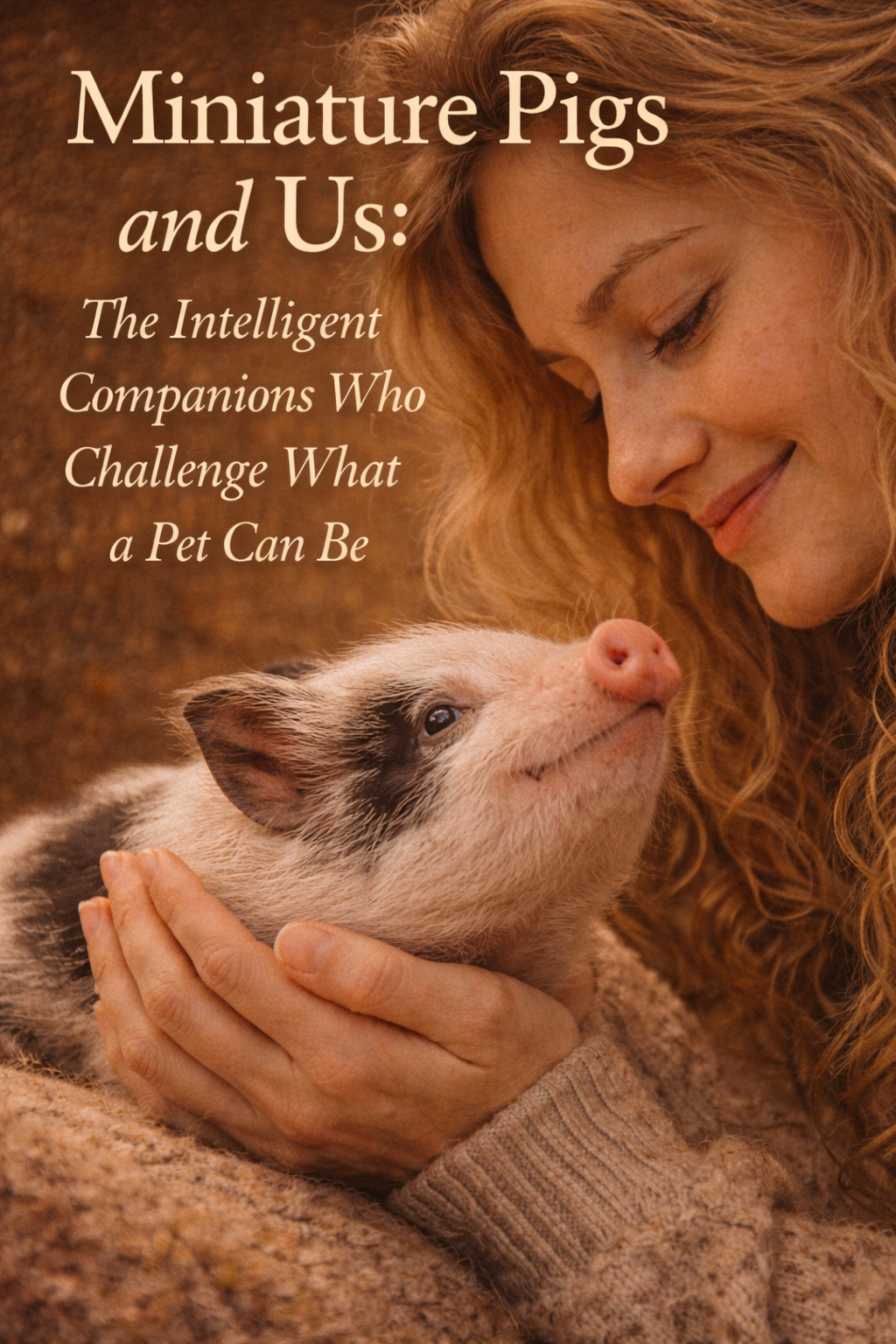
Miniature pigs don’t fit neatly into expectations.
They are affectionate yet independent, playful yet deeply intelligent, emotionally expressive yet grounded. The relationship between miniature pigs and humans often begins with curiosity and ends with profound respect. These animals don’t simply live alongside humans. They engage with them.
Miniature pigs don’t behave like pets.
They behave like personalities.
From Farm Animals to Family Members
Pigs have lived near humans for thousands of years, primarily as livestock. Their intelligence was long overlooked because their role was functional. But as miniature pigs began entering homes, humans started to notice something unexpected: emotional depth.
Miniature pigs adapted quickly to domestic environments. They learned routines, recognized individuals, responded to tone, and formed strong attachments. What had once been a working relationship evolved into companionship.
This shift forced humans to reconsider long-held assumptions about pigs and intelligence.
Why Humans Are Drawn to Miniature Pigs
Miniature pigs appeal to humans who value connection through intellect and personality. Pigs are problem-solvers. They remember, anticipate, and express preferences clearly. They enjoy interaction and often seek engagement on their own terms.
Humans are drawn to miniature pigs because they feel emotionally present. A pig notices when routines change. They respond to attention, voice, and affection. Their reactions feel thoughtful rather than instinctive.
Living with a miniature pig feels less like ownership and more like cohabitation.
The Emotional World of Miniature Pigs
Miniature pigs are highly social. They form bonds not only with humans but with other animals in the household. They communicate through vocalizations, body language, and behavior patterns that quickly become familiar to their caregivers.
They experience boredom, curiosity, excitement, and frustration. They seek stimulation and emotional reassurance. This emotional complexity makes the bond with humans feel reciprocal.
A miniature pig doesn’t simply tolerate human presence.
They participate in it.
Miniature Pigs as Emotional Anchors
Because of their intelligence and sensitivity, miniature pigs thrive in stable, emotionally aware environments. They respond best to consistency, patience, and positive reinforcement.
For humans, caring for a miniature pig can be grounding. It requires attentiveness, routine, and empathy. The pig’s presence encourages structure while also offering companionship that feels sincere.
Many owners describe their pigs as emotionally intuitive, reacting to stress or mood changes in the household.
Modern Life and Living with Miniature Pigs
In contemporary homes, miniature pigs challenge traditional definitions of pets. They require space, enrichment, and mental stimulation. They are not decorative animals. They are interactive companions.
This makes them ideal for humans who want engagement rather than passivity. Miniature pigs fit best in households prepared to treat them as sentient, complex beings rather than novelties.
What Miniature Pigs Teach Humans
Miniature pigs teach respect.
They teach patience.
They teach the importance of mental stimulation and emotional presence.
They remind humans that intelligence and emotion exist where we least expect them. That companionship doesn’t have to look familiar to be profound.
The relationship between miniature pigs and humans is not based on obedience or tradition. It is based on mutual recognition.
Miniature pigs don’t adapt to human life quietly.
They ask humans to adapt too.
And in doing so, they expand our understanding of connection, empathy, and what it truly means to share a life with another species.